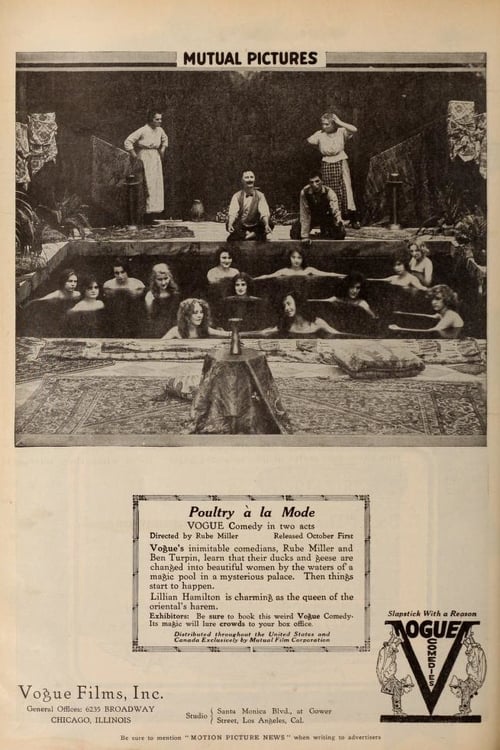
Poultry à la Mode
1916
No user ratings available yet
Representation score: 1.9 out of 10
No Poster Available
Representation Score
Minimal
1916
Director
Frank Griffin
Runtime
24 minutes
Average Rating
No ratings yetNew Showbiz Analysis
This film is a classic example of the 1916 Keystone-Triangle era, emphasizing slapstick and physical comedy over deeper sociopolitical themes. While Louise Fazenda showcases female comedic energy, the work adheres to the era's standard types. Diversity is constrained by the historical context of early silent cinema. The production mirrors the demographic norms of the time, featuring homogeneous casts and a lack of layered representation. Ultimately, the film serves as a historical record of early cinematic techniques. It fails to challenge traditional social structures or offer diverse character dynamics beyond its era's limitations.
Category Breakdown
There are no LGBTQ+ identities or stories in this film. Non-straight-centered representations were rare in 1916 due to societal norms of the time.
Louise Fazenda stands out with her energetic physical comedy. However, the film may rely on traditional gender stereotypes common in early silent slapstick.
The film reflects the demographic uniformity of early 20th-century American studios. There is no evidence of significant non-white involvement or casting actors of different backgrounds.
The story follows traditional slapstick structures focused on physical humor. It lacks complex moral nuances or critiques of systemic institutions.
Characters with disabilities are not shown with meaningful roles. Physical quirks in this era often served as mere comedic devices rather than authentic representation.
Present on Screen
Limited or Absent
Official Synopsis
Keystone-Triangle comedy starring Louise Fazenda and Charles Murray.
1916
1926
1926

1909
1919
1912
1915
1915
No reviews yet. Be the first to share your thoughts on this movie!
Use the rating form above to leave a star rating and optional review.