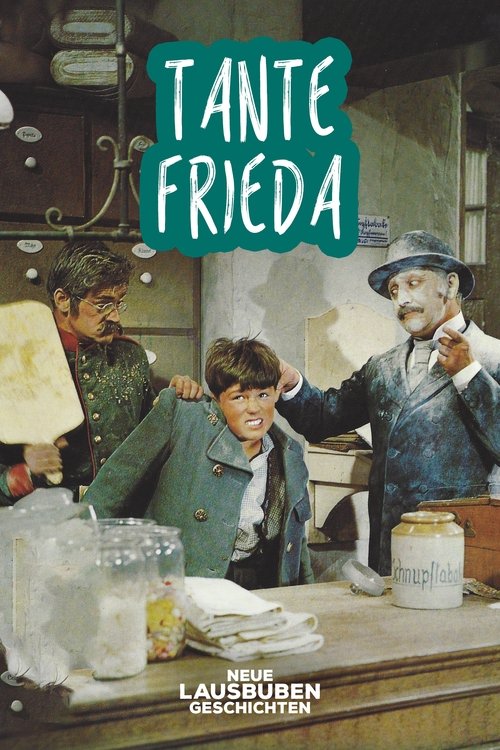
Tante Frieda - Neue Lausbubengeschichten
1965
No user ratings available yet
Diversity score: 2.2 out of 10

1967
Director
Werner Jacobs
Runtime
94 minutes
Average Rating
No ratings yetSynopsis
Kummerow, a village in North East Germany, around 1900: Mean-spirited miller Düker wants to drive cowherd Krischan out of the village. Being popular with the local children, Krischan can rely on the help of schoolboys Martin and Johannes and their friends, who try to prevent the miller's plans by playing pranks on him.
Overall Score
Minimal
Category Breakdown
LGBTQ+ Representation
The film follows a traditional comedic structure centered on village life. There is no evidence of non-cisnormative gender identities or narratives that critique heteronormativity.
Gender Representation
The narrative architecture centers on male-driven conflict and male-centric social groups. Power dynamics align with traditional patriarchal hierarchies of the early 20th century.
Racial & Ethnic Diversity
Set in a North East German village, the film is framed within a localized, homogeneous European context. It likely reinforces a singular ethnic identity.
Religious & Cultural Diversity
The film functions as a traditional pastoral comedy. The conflict is rooted in local community standing rather than a critique of Western institutions.
Disability Representation
There is no information regarding characters with visible or invisible disabilities within the narrative.
Strengths
Areas for Improvement
AI Analysis
The film is a period-specific comedy that operates within the conventional social and cultural frameworks of its era. It prioritizes local, traditional conflict over the exploration of identity politics or the disruption of established social hierarchies. The narrative focuses on a localized German village setting around 1900, which naturally limits the scope of racial and ethnic diversity. The central conflict between a miller and a cowherd reinforces traditional social roles and patriarchal structures. Ultimately, the work serves as escapist entertainment that adheres to the social mores of the mid-20th century rather than subverting them.
1965
1969
1968
1968
1973
1971
1974
1949
1973

1954
1939

1978
No reviews yet. Be the first to share your thoughts on this movie!
Use the rating form above to leave a star rating and optional review.