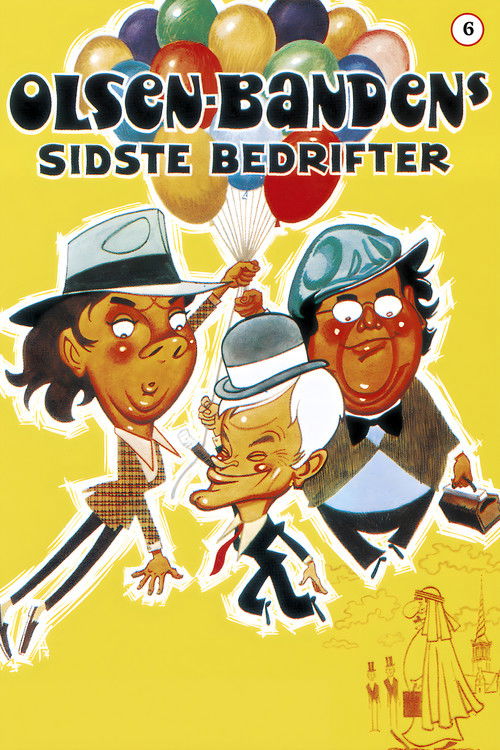
The Last Exploits of the Olsen Gang
1974
No user ratings available yet
Representation score: 1.2 out of 10
Representation Score
Limited
1977
Not RatedDirector
Erik Balling
Runtime
105 minutes
Average Rating
No ratings yetNew Showbiz Analysis
The film is set in the context of 1970s Denmark and prioritizes caper genre and slapstick comedy over social commentary. It leans on established formulas that align with the demographic norms of its time. While the narrative mildly critiques institutional bureaucracy, it stays within traditional gender and social roles. Overall, the film serves as entertaining escapism rather than a platform for exploring diverse identities or social issues.
Category Breakdown
The film does not include any LGBTQ+ characters or themes. It assumes everyone is straight and cisgender.
Male characters dominate the plot, while female characters such as Yvonne are mostly confined to domestic or supportive roles.
The cast is primarily white and Danish, reflecting the film's local context. The story does not feature diverse ethnic perspectives or non-white characters.
The story offers a light-hearted look at bureaucracy and the 'system' through crime as a comedic device. It does not delve into deeper social critiques.
Egon's forgetfulness is used as a comedic element. The film does not explore neurodivergence or visible disabilities in depth.
Present on Screen
Limited or Absent
Official Synopsis
Egon is starting to be a little forgetful; he forgot the zone number, so he fails to open the strongbox. When he gets out of Vridslose State Prison, Kjeld and Benny have become associates of Yvonne's cousin Georg from America. He is not just some old-fashioned strongbox thief that can't remember like Egon, but a young hip IT criminal, that thinks that everyone else is inferior. However, Egon doesn't take lightly to the Georg's patronizing so he sabotages Georg's computer and ruins his cup. This time Egon's ambitions reaches a new high, when he and his gang break in to the World Bank, and they get away with it. Of course, thanks to Yvonne, they aren't rich very long.
1974

1964

1973
1971
1975

1979
1972

1968
No reviews yet. Be the first to share your thoughts on this movie!
Use the rating form above to leave a star rating and optional review.