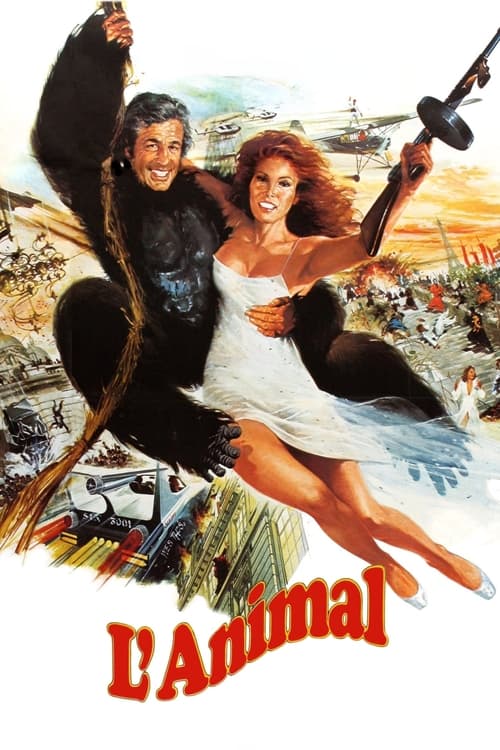
Animal
1977
No user ratings available yet
Representation score: 1.6 out of 10

Representation Score
Limited
1983
Director
Claude Zidi
Runtime
102 minutes
Average Rating
No ratings yetNew Showbiz Analysis
Banzaï presents a mix of conventional demographic casting and a subversive thematic core. While the characters and social structures align with the norms of 1980s European comedy, the narrative itself challenges the sanctity of Western institutions. The film's strength lies in its critique of economic and bureaucratic absurdity. It portrays the protagonists' deceptive and criminal actions as necessary survival strategies against an obstructive system. However, the film lacks depth in its portrayal of race and gender. International locations are used primarily as exotic backdrops for slapstick humor rather than for exploring diverse ethnic backgrounds.
Category Breakdown
The film focuses on a traditional heterosexual relationship between Michel and Isabelle. There are no representations of LGBTQ+ identities or same-sex intimacy.
Isabelle works as an airline hostess, but the narrative remains centered around Michel's efforts to manage his personal and professional life. The story is driven by Michel's actions.
The cast is predominantly white, typical of 1980s French cinema. International settings like Tunisia and Hong Kong are used as exotic backdrops for slapstick humor rather than for exploring diverse ethnic backgrounds.
The film challenges traditional moral hierarchies by presenting theft and deception as practical responses to bureaucratic obstacles. It critiques capitalist stability through the lens of ordinary people struggling against impersonal systems.
There is no significant focus on disabilities, either visible or invisible. Physical mishaps are used solely as elements of slapstick comedy rather than as meaningful character development.
Present on Screen
Limited or Absent
Official Synopsis
Michel works there manically solving people's problems over the phone. He is about to tie the knot with his girl friend Isabelle, an airline hostess. She flies all over the world, he hates to leave the office. A series of madcap mishaps involving theft or injury (as you would expect in his line of work) ensues after Michel promises Isabelle nothing will delay their marriage and she promises in turn that she's done flying. Once this unlikely promise is made, it becomes premise and both are forced into escalating white lies to maintain the appearance of keeping their word. Their predicament mounts as Isabelle is forced to do a few more flights, while Michel is compelled to travel to New York, Tunisia, and finally Hong Kong, where they are finally reunited in the throes of a contrived and hilarious drug deal involving a 747, water taxi chases, and martial arts.
1977
1971
1979

1972

1997
1980
1993

1995
No reviews yet. Be the first to share your thoughts on this movie!
Use the rating form above to leave a star rating and optional review.