Three Lives
1971
No user ratings available yet
Representation score: 6.5 out of 10
Representation Score
Good
2000
13Director
Marie Mandy
Runtime
60 minutes
Average Rating
No ratings yetNew Showbiz Analysis
Marie Mandy’s documentary is a sophisticated critique of systemic norms in visual storytelling. It moves beyond simple inclusion by utilizing a global cohort of creators to dismantle the historical dominance of the male perspective. The film succeeds by prioritizing the control of female filmmakers and exploring the nuances of the female perspective. Its strength lies in its ability to present a multi-generational and international dialogue rather than a monolithic viewpoint. While the film excels in gender and cultural breadth, it lacks specific information regarding disability representation. However, its international scope ensures a rich, layered examination of identity.
Category Breakdown
The documentary addresses the deconstruction of the assumption that everyone is straight or cisgender through its subject matter. It includes filmmakers who explore non-traditional depictions of desire and the body, suggesting a deep engagement with queer theory.
This film serves as a direct critique of the traditional male perspective. By centering female intellect and creative control, it disrupts conventional gender hierarchies and explores how women construct roles without objectification.
The documentary achieves breadth by spanning multiple geographies. By including voices from Tunisia and England, it avoids a Western-centric bias and examines how gender intersects with different societal structures.
The film promotes a pluralistic morality by framing the female perspective as a tool to challenge systemic objectification. It rejects dogmatic narratives in favor of complex, individualized truths regarding art and the body.
There is no explicit evidence regarding the portrayal of disability within the film's content.
Present on Screen
Limited or Absent
Official Synopsis
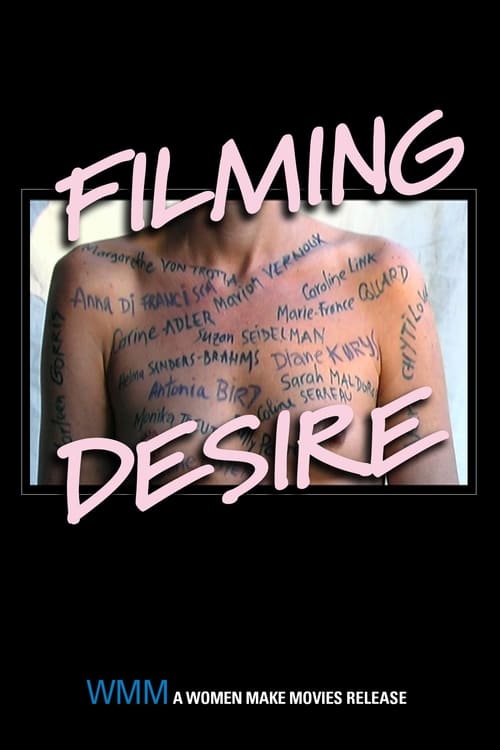
The film consists largely of a series of interviews with female filmmakers from several different countries and filmmaking eras. Some, such as Agnès Varda and Catherine Breillat (both from France), have been making films for decades in a conscious effort to provide an alternative to the male filmmaking model; others, such as Moufida Tlatli (Tunisia) and Carine Adler (England), are relative newcomers to directing, and their approaches seem more personal and less political. The film as a whole manages to cover some important topics in the feminist debate about film -- how does one construct a female gaze, how can one film nude bodies without objectifying the actors (of either sex), what constitutes a strong female role -- while also making it clear that “women’s film” comprises as many different approaches to filmmaking as there are female filmmakers.
1971
1965
2016
2019
2016
1992
2018
2014
No reviews yet. Be the first to share your thoughts on this movie!
Use the rating form above to leave a star rating and optional review.