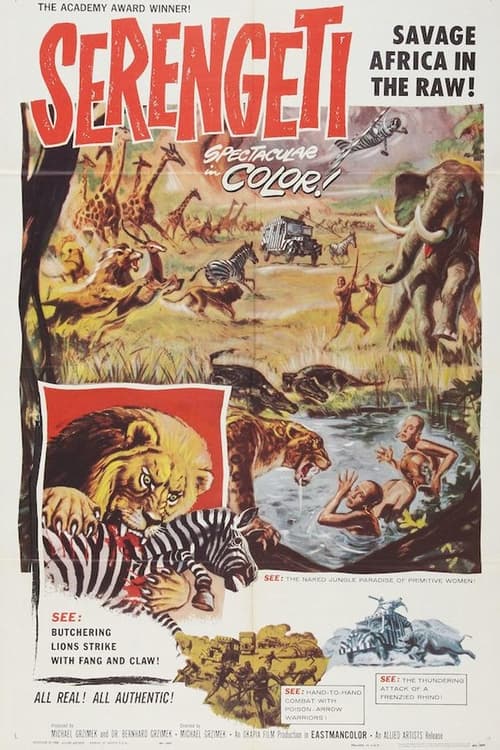
Serengeti Shall Not Die
1959
No user ratings available yet
Representation score: 0.5 out of 10
Representation Score
Fair
1974
RDirector
Eugene S. Jones
Runtime
102 minutes
Average Rating
No ratings yetNew Showbiz Analysis
The Wild and the Brave functions as a crucial historical record of decolonization. Its main strength lies in its detailed portrayal of the transfer of institutional authority from British to Ugandan hands. By focusing on the transition from Iain Ross to Paul Ssali, the film provides a unique insight into the evolving power dynamics of the early 1970s. However, the film’s scope is limited when it comes to social identities. It predominantly centers on male-dominated professional environments, offering little space for gender diversity or LGBTQ+ representation. The documentary prioritizes the political and racial transitions of the Kidepo Valley National Park over broader social issues. Ultimately, the film excels as a study of racial shifts and the dismantling of Western administrative structures. While it falls short in representing gender and identity diversity, its documentation of cultural and racial transformations is noteworthy.
Category Breakdown
The film does not include any LGBTQ+ characters or narratives. The storyline focuses solely on the professional and racial changes in park leadership.
The story primarily revolves around male-dominated spheres of colonial administration and wildlife management. There is no indication of women taking significant roles or challenging gender hierarchies.
The film emphasizes the postcolonial handover by documenting the shift from British to Ugandan leadership. It challenges traditional colonial clichés by showing this transition.
The work delves into the complexities of post-colonialism, examining the tensions and cooperation during the handover process. It frames this as a journey towards reclaiming local control.
There is no mention or portrayal of physical or neurodivergent disabilities in the film's content.
Present on Screen
Limited or Absent
Official Synopsis
The Wild and the Brave is a 1974 documentary film directed by Eugene S. Jones. The film portrays the relationship between Iain Ross, the outgoing British Chief Warden of Kidepo Valley National Park and his Ugandan replacement Paul Ssali. It portrays the racial and cultural tensions and amity of the postcolonial handover from 1970 to 1972.
1959
1966
1966
2014

1982
2014
1971
1976
No reviews yet. Be the first to share your thoughts on this movie!
Use the rating form above to leave a star rating and optional review.