Gettysburg: The Boys in Blue & Gray
2002
No user ratings available yet
Representation score: 0.6 out of 10
Representation Score
Minimal
2004
PGDirector
Robert Child
Runtime
86 minutes
Average Rating
No ratings yetNew Showbiz Analysis
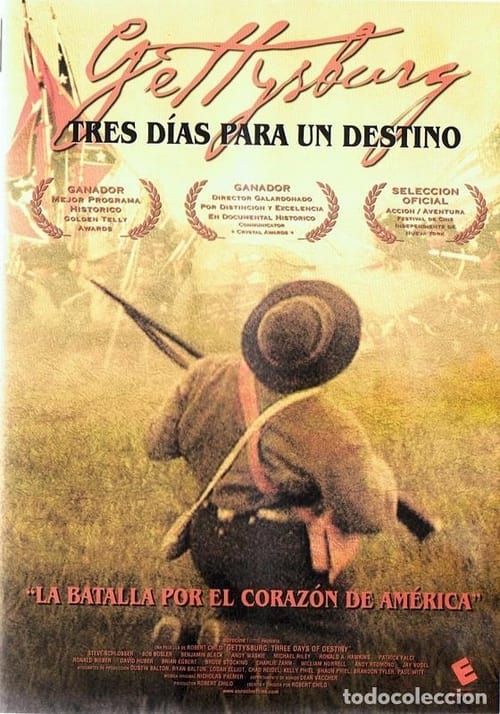
Gettysburg: Three Days of Destiny operates as a traditional historical reconstruction, emphasizing pedagogical accuracy and the preservation of military records. The narrative structure centers on the decisions of Union and Confederate commanders, which naturally focuses on the masculine-dominated hierarchies of the 19th-century officer corps. Ultimately, the film serves as a commemorative tool for historical memory, reinforcing the social and racial status quo of the Civil War era.
Category Breakdown
The film reflects the social structures of the 1860s, where there is no indication of non-traditional gender identities or same-sex relationships among the characters.
The narrative emphasizes the roles of male officers and commanders, reinforcing the traditional gender hierarchy of 19th-century warfare.
The film highlights the military actions and decisions of the officer corps, reflecting the homogeneous racial hierarchies of the time without showcasing the experiences of underrepresented groups.
The film commemorates historical military events with a traditionalist perspective, focusing on institutional memory rather than diverse cultural viewpoints.
The film does not focus on characters with visible or invisible disabilities, concentrating instead on large-scale battle sequences and command decisions.
Present on Screen
Limited or Absent
Official Synopsis
This is the epic story of the Battle of Gettysburg presented by the Gettysburg Anniversary Committee and filmed at the massive 140th Gettysburg Battle Reenactment. Additional locations include the White House of the Confederacy, the Lutheran Theological Seminary and the Cashtown Inn. The dramatic story unfolds through both Union and Confederate commanders dispatches, diaries and after-battle reports. The action is nonstop with some of the biggest and most exciting Civil War battle sequences ever filmed. Produced and directed by international award-winning filmmaker Robert Child, with a stirring original soundtrack by composer Nicholas Palmer, Gettysburg: Three Days of Destiny is the compelling story of the commanders, decisions and pivotal moments of the battle that turned the tide of the Civil War.
2002
2007
2011
1993
1999

2014

2012
2001
No reviews yet. Be the first to share your thoughts on this movie!
Use the rating form above to leave a star rating and optional review.