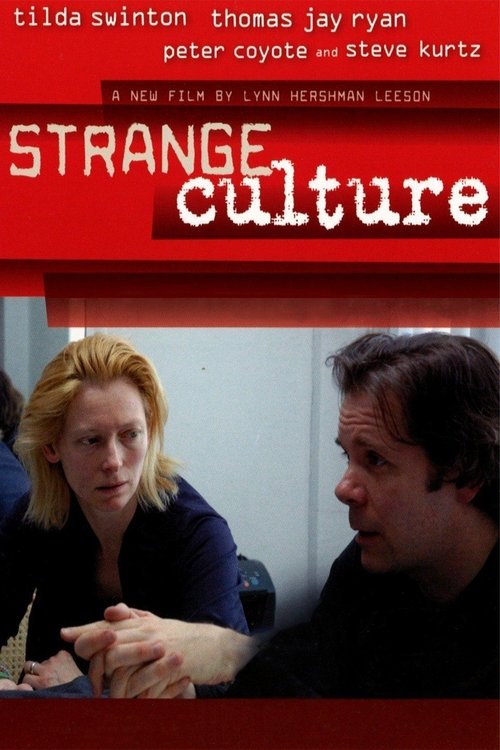
Strange Culture
2007
No user ratings available yet
Diversity score: 5.5 out of 10

1995
Director
Iara Lee
Runtime
85 minutes
Average Rating
No ratings yetSynopsis
Conceived as an electronic road movie, this documentary investigates cutting edge technologies and their influence on our culture as we approach the 21st century. It takes off from the idea that mankind's effort to tap the power of Nature has been so successful that a new world is suddenly emerging, an artificial reality. Virtual Reality, digital and biotechnology, plastic surgery and mood-altering drugs promise seemingly unlimited powers to our bodies, and ourselves. This film presents the implications of having access to such power as we all scramble to inhabit our latest science fictions.
Overall Score
Fair
Category Breakdown
LGBTQ+ Representation
The film explores the malleability of the human body through biotechnology. This focus on reshaping the self inherently challenges traditional heteronormative and cisnormative definitions of nature.
Gender Representation
By examining plastic surgery and biotechnology, the documentary critiques traditional gendered expectations. It suggests a move toward a more fluid, technologically mediated existence rather than biological destiny.
Racial & Ethnic Diversity
The globalized 'electronic road movie' format implies an international scope. However, specific details regarding a non-white majority cast or ethnographic data are not explicitly provided.
Religious & Cultural Diversity
The narrative adopts a postmodern, skeptical stance toward traditional natural orders. It prioritizes secular, scientific, and subjective experiences over established religious or moral frameworks.
Disability Representation
The investigation into physical augmentation provides a platform for discussing neurodivergence. It deconstructs the medical model of disability by framing augmentation as a form of technological empowerment.
Strengths
Areas for Improvement
AI Analysis
Synthetic Pleasures functions as a thematic critique of how technology reshapes human identity. It succeeds by using the concept of 'artificial reality' to challenge biological and cultural hierarchies. The film's strength lies in its postmodern lens, which views the body as a fluid entity rather than a fixed biological constant. However, the documentary lacks specific demographic evidence to confirm its representation of race or specific LGBTQ+ identities. While the subtext is progressive, the actual visibility of diverse groups remains unverified. The film's impact is more intellectual and systemic than purely representative. Ultimately, the work is a sophisticated exploration of how biotechnology and digital advancements disrupt traditional norms. It moves the conversation from fixed identities toward a future of technological agency.
2007

2019
2026
2011
2020

2024

2013
2017

2024
2019

2019
2010
No reviews yet. Be the first to share your thoughts on this movie!
Use the rating form above to leave a star rating and optional review.