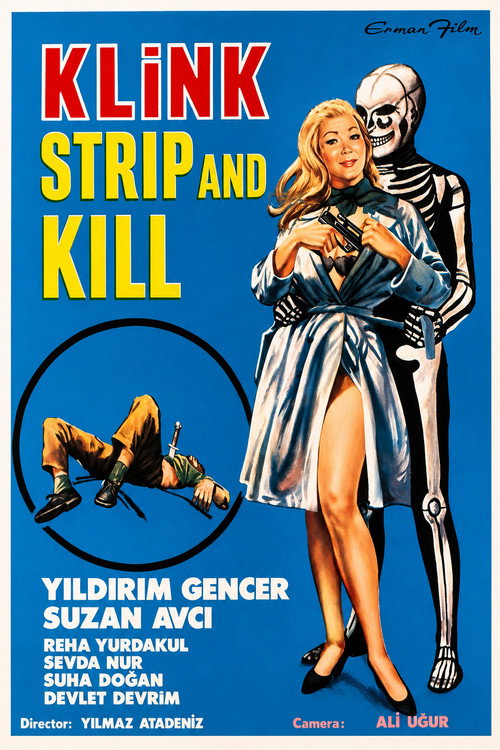
Kilink: Strip and Kill
1967
No user ratings available yet
Representation score: 2.4 out of 10
Representation Score
Limited
1967
Director
Yılmaz Atadeniz
Runtime
48 minutes
Average Rating
No ratings yetNew Showbiz Analysis
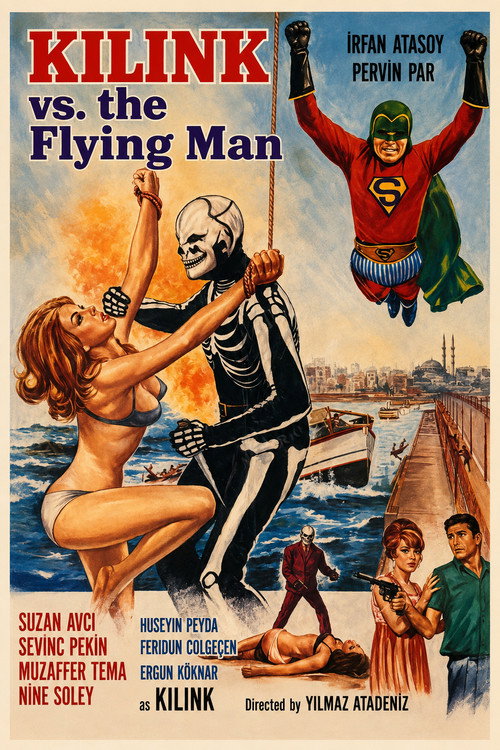
Killing vs. the Flying Man is a quintessential 1960s adventure piece that prioritizes genre clichés over social complexity. The narrative relies heavily on established archetypes, such as the male hero and the captive female, maintaining a rigid social hierarchy. While the film serves as a significant example of the Yeşilçam era's high-concept adventure style, it lacks depth in reflecting multiple aspects of identity. The conflict is driven by physical stakes and moral binaries rather than diverse perspectives or challenges to identity norms. Ultimately, the film functions as a traditional genre exercise, reinforcing the social and gender norms of its era through predictable character roles and localized production standards.
Category Breakdown
The film adheres to conventional mid-century romantic dynamics, focusing on traditional archetypes such as a captive fiancé without exploring non-cisgender identities.
Female characters are primarily portrayed as damsels in distress, with power dynamics centered around male protagonists and antagonists, reinforcing traditional gender hierarchies.
The production reflects the localized standards of 1960s Turkish cinema, using remote island settings for conflict but lacking intentional ethnic blending or diverse casting.
The story follows a standard hero-versus-villain structure common in Western-influenced adventure films, emphasizing physical conflict and clear moral binaries without complex cultural critiques.
There is no information available regarding characters with visible or invisible disabilities. The current narrative context provides no basis for an assessment in this category.
Present on Screen
Limited or Absent
Official Synopsis
The first sequel to KILINK ISTANBUL'DA picks up right where the 1st installment left off. Superman manages to locate Kilink's hideout on a remote island where his fiancé and her father are being held behind bars. Meanwhile, Kilink's scientists finally manufacture a lethal destructive canon-like weapon that is able to blast away even portions of mountains.
1967
1965
1967

1998
1949
1961

1972

1989
No reviews yet. Be the first to share your thoughts on this movie!
Use the rating form above to leave a star rating and optional review.