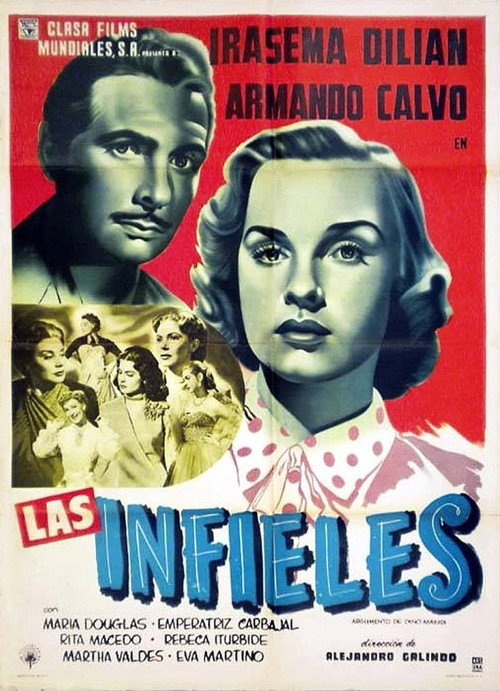
Las infieles
1953
No user ratings available yet
Representation score: 3.4 out of 10
Representation Score
Limited
1953
Director
Roberto Rodríguez
Runtime
93 minutes
Average Rating
No ratings yetNew Showbiz Analysis
This 1953 melodrama operates within the strict social and religious frameworks of its time. The plot centers on a woman's struggle between convent life and secular temptation, reinforcing traditional moral hierarchies. The film's structure prioritizes domestic scandal and religious adherence, functioning as a standard mid-century drama that upholds established social institutions rather than challenging them. Overall, the work lacks modern diversity markers, focusing instead on the tension between individual desire and conventional societal expectations.
Category Breakdown
The story emphasizes religious vows and traditions that assume everyone is straight or cisgender. There is no mention of non-binary genders or critiques of conventional morality.
The film features a female protagonist, but the drama centers on domestic and relational dynamics. Women are portrayed through traditional roles of sanctity or scandal.
The film likely reflects the demographic reality of its mid-century setting. It lacks intentional casting or descriptions that highlight diverse backgrounds.
The narrative is centered around Western Christian institutions. The conflict reinforces traditional religious and familial norms rather than questioning them.
There is no information regarding the depiction of physical or neurodivergent characters.
Present on Screen
Limited or Absent
Official Synopsis
Hortensia is almost ready to take her vows at the convent... but she gets distracted by her stepmother's boyfriend. Things do not go well.
1953
1962
1957

2002
1950
1952
1980
1938
No reviews yet. Be the first to share your thoughts on this movie!
Use the rating form above to leave a star rating and optional review.