
Banjo the Woodpile Cat
1979
No user ratings available yet
Diversity score: 2.6 out of 10
1994
Director
Toshiyuki Hiruma, Takashi Masunaga
Runtime
46 minutes
Average Rating
No ratings yetSynopsis
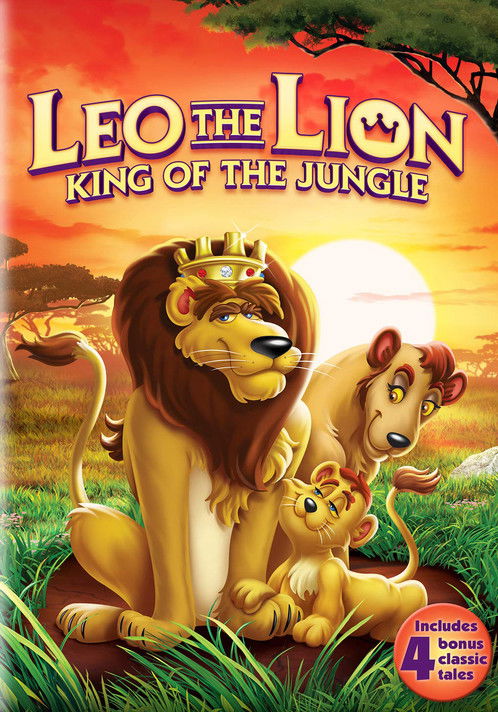
Leo is the lion king of the jungle, but unfortunately he doesn't know well what a king's job is. He believes it is his right to do as he pleases, even if it means disrupting the peace of others or being plain rude to them, as a king, Leo thinks everyone should look out for his well-being and comfort. One day, Leo meets a lion cub named Tooey whose mother has been recently taken away and who comes to Leo for help, being as selfish as he is, Leo turns the young lion away. However, after several different adventures, Leo learns what his place as a king is and how he must behave and treat the creatures who have almost lost all faith in him. Leo rallies the jungle animals to the rescue, and in the epilogue, the narrator Michael Donovan says that Leo asked Tooey's mother to be his queen, and the cub himself grew into a strong young lion, now called Leo II and one day he would be the Jungle King.
Overall Score
Limited
Category Breakdown
LGBTQ+ Representation
The film follows a traditional heteronormative structure. There is no evidence of non-cisnormative identities or same-sex intimacy within the narrative.
Gender Representation
The story centers on a masculine hierarchy and patriarchal leadership. Female characters remain passive, serving primarily as plot catalysts or status validators for the protagonist.
Racial & Ethnic Diversity
The jungle setting uses anthropomorphic animals as proxies for social interaction. However, the film does not use these species to critique racial or ethnic hierarchies.
Religious & Cultural Diversity
The narrative reinforces conventional social stability and traditional views of leadership. It focuses on individual redemption and the fulfillment of established community roles.
Disability Representation
There is no information regarding characters with visible or invisible disabilities. The story does not address neurodivergence or chronic health conditions.
Strengths
Areas for Improvement
AI Analysis
Leo the Lion: King of the Jungle is a conventional morality tale focused on individual character growth. The narrative prioritizes the restoration of social order through a traditional leadership model, which reinforces established hierarchies rather than challenging them. The film relies on standard tropes, such as a protagonist seeking a queen to validate his status. This structure maintains a patriarchal framework where female characters occupy limited, reactive roles within the jungle ecosystem. While the adventure provides a standard moral arc, it lacks the intentionality needed for intersectional representation. The focus remains on personal responsibility and communal duty within a traditional social structure.
1979
1995

2000
2023
1981
1981

2025
2025

2024
2019
2019

2019
No reviews yet. Be the first to share your thoughts on this movie!
Use the rating form above to leave a star rating and optional review.