Warszawa 1956
1956
No user ratings available yet
Representation score: 3.1 out of 10
Representation Score
Fair
1955
Director
Andrzej Munk
Runtime
19 minutes
Average Rating
No ratings yetNew Showbiz Analysis
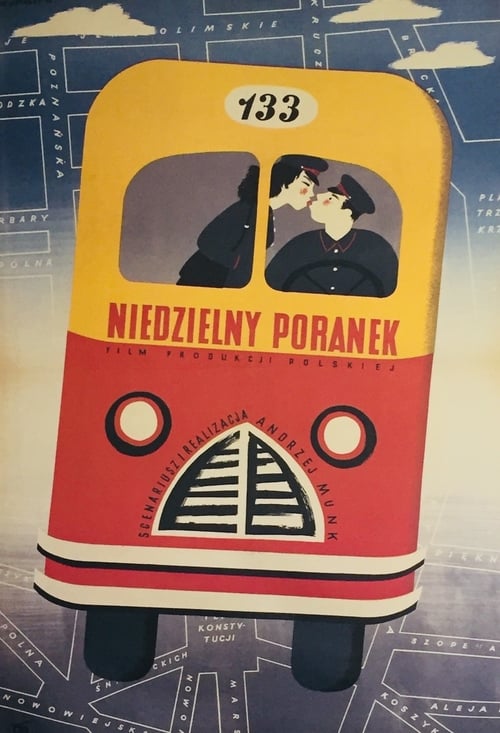
Andrzej Munk’s documentary captures a sociological snapshot of post-war Warsaw through the lens of a red bus journey. It serves as a record of social cohesion and reconstruction rather than a vehicle for identity-based subversion. The film’s low diversity scores reflect the socio-political constraints of 1955 Poland. It presents a homogeneous society where characters fulfill traditional roles within a collective, state-focused framework. While it lacks modern characters who reflect more than one aspect of diversity, the work provides valuable documentation of the era’s communal spirit and the shared experience of rebuilding a nation.
Category Breakdown
The film follows the social norms of 1955 Poland and does not depict any non-traditional gender identities or same-sex relationships.
Men and women interact according to traditional social roles. The film observes these roles without challenging them.
The cast is ethnically uniform, reflecting the demographics of mid-century Poland. The production does not include diverse ethnic representation.
The story focuses on the collective social experience and state-led reconstruction efforts. It highlights the communal fabric of the working and middle classes.
The vignettes focus on able-bodied citizens participating in social life. There are no characters with visible or invisible disabilities.
Present on Screen
Limited or Absent
Official Synopsis
Short propaganda film. Warsaw's post-war reconstruction as seen through the eyes of the passengers of a red bus.
1956

1927
1993
1929
1980
1969
1958
1953
No reviews yet. Be the first to share your thoughts on this movie!
Use the rating form above to leave a star rating and optional review.