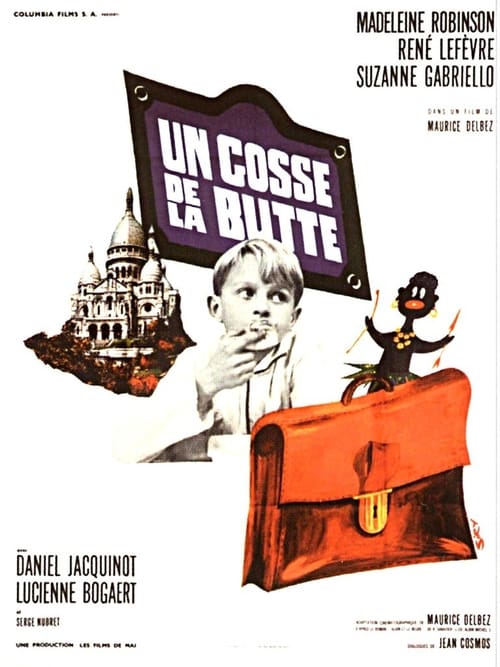
Un gosse de la butte
1964
No user ratings available yet
Representation score: 1.1 out of 10

Representation Score
Fair
1996
Director
Jacques Ertaud
Runtime
310 minutes
Average Rating
No ratings yetNew Showbiz Analysis
Jacques Ertaud’s drama focuses on a child’s journey through a fragmented social landscape in 1930s Paris. By replacing the traditional nuclear family with a network of offbeat adults, the film challenges standard domestic expectations and explores unconventional social bonds. Though the film lacks explicit markers like LGBTQ+ identities or significant racial diversity, it excels in deconstructing institutionalized care. The narrative favors character-driven social fluidity over rigid hierarchies. Ultimately, the film studies non-traditional domesticity, though its historical setting and lack of specific identity markers limit its broader diversity impact.
Category Breakdown
The film does not explicitly depict LGBTQ+ identities or same-sex relationships. However, the focus on offbeat adults hints at a possible exploration of non-traditional domestic arrangements.
The story disrupts traditional nuclear family structures by removing the maternal figure, shifting focus to a more fluid social hierarchy.
Set in 1930s Montmartre, the story likely reflects the Eurocentric demographics of that time. The specific ethnic makeup of the cast is unknown.
The film emphasizes subjective experiences over established Western norms. It explores moral relativism by highlighting the protagonist's life through unconventional social ties.
There is no indication of characters with visible or invisible disabilities in the narrative.
Present on Screen
Limited or Absent
Official Synopsis
Oliver has a happy childhood in the streets of Montmartre, Paris, in the 30's. Suddenly his mother dies. He is alone and helpless. He seeks comfort with the offbeat adults.
1964

1976

1959

1967

2007

1983
2006

2008
No reviews yet. Be the first to share your thoughts on this movie!
Use the rating form above to leave a star rating and optional review.