
Mothers
1967
No user ratings available yet
Representation score: 6.0 out of 10
Representation Score
Fair
1979
Director
Michelle Citron
Runtime
49 minutes
Average Rating
No ratings yetNew Showbiz Analysis
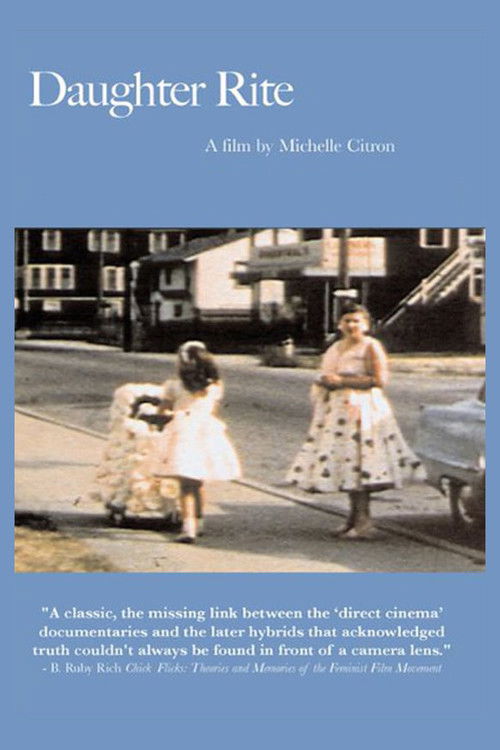
Daughter Rite is a feminist documentary that focuses on female subjectivity. By emphasizing the matrilineal bond and the intricacies of mother-daughter relationships, the film moves away from traditional patriarchal storytelling structures. The film excels in its commitment to feminist inquiry, prioritizing women's ability to drive the story and interpersonal dynamics. This structural choice challenges the male-centric norms prevalent during the late 1970s. While the film shines in gender representation, the lack of specific data regarding racial, ethnic, or disability representation hinders a comprehensive assessment of its demographic breadth.
Category Breakdown
The film touches on female relationships, suggesting a move away from traditional family structures. However, it does not provide detailed depictions of queer intimacy.
The documentary centers women as the main drivers of the narrative, disrupting traditional cinematic hierarchies that often sideline them.
There is insufficient information to determine the racial composition of the participants or the demographic breadth of the documentary.
The work critiques traditional Western domesticity by highlighting the complexities of maternal bonds.
There is no indication that disability or neurodivergence are central themes in the documentary.
Present on Screen
Limited or Absent
Official Synopsis
A feminist documentary about female relationships, especially between mother and daughter.
1967
2023

1971

1971

1971

2022
2008
1975
No reviews yet. Be the first to share your thoughts on this movie!
Use the rating form above to leave a star rating and optional review.