
Jumping
1984
No user ratings available yet
Diversity score: 5.4 out of 10
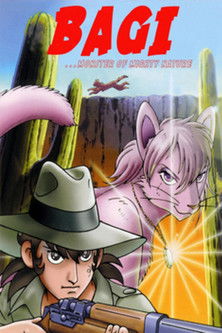
1984
Director
Osamu Tezuka
Runtime
90 minutes
Average Rating
No ratings yetSynopsis
In 1984 the Japanese government approved gene recombination experiments. Baggy is Tezuka’s response. A cute kitten escapes a lab, and is befriended by lonely child Ryosuke. Years later, he joins her in a quest that’s part spaghetti Western, part contemporary adventure.
Overall Score
Fair
Category Breakdown
LGBTQ+ Representation
The narrative lacks explicit depictions of LGBTQ+ identities or non-heteronormative dynamics. The story focuses instead on the bond between a child and a genetically modified creature.
Gender Representation
The story centers on Ryosuke, a young boy. While the gendered agency of supporting characters is unconfirmed, the focus on a child navigating scientific experimentation suggests a departure from adult-led hierarchies.
Racial & Ethnic Diversity
As a Japanese production, the film offers a non-Western perspective. Its Spaghetti Western stylistic influences suggest a genre-bending approach that disrupts conventional domestic storytelling tropes.
Religious & Cultural Diversity
The film critiques government-sanctioned gene recombination and the ethics of unchecked scientific advancement. It positions the 'monster' as a victim of systemic institutional overreach.
Disability Representation
There is no evidence regarding the portrayal of physical or neurodivergent disabilities within the available synopsis.
Strengths
Areas for Improvement
AI Analysis
Osamu Tezuka’s work often uses non-human characters to mirror systemic societal issues, and this film follows that tradition by critiquing the ethics of scientific progress. The narrative functions as a sophisticated critique of institutional power and state-sanctioned experimentation. While the film lacks explicit demographic representation regarding LGBTQ+ identities or specific racial blending, it succeeds in challenging traditional moral certainties. It prioritizes a systemic critique of how humanity interacts with the natural world. The production's strength lies in its thematic depth rather than diverse character casting. It uses a genre-bending, Spaghetti Western-inspired adventure to explore the consequences of human interference with nature.
1984

1978
1968
1987
No reviews yet. Be the first to share your thoughts on this movie!
Use the rating form above to leave a star rating and optional review.