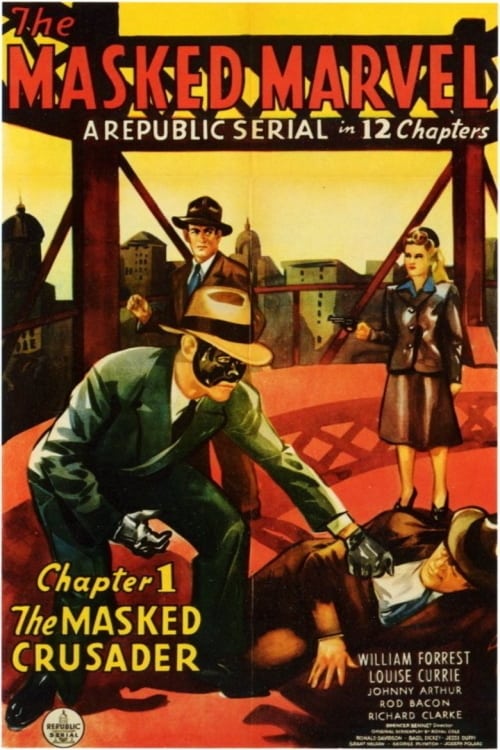
The Masked Marvel
1943
No user ratings available yet
Diversity score: 1.4 out of 10
No Poster Available
1966
ApprovedDirector
Spencer Gordon Bennet
Runtime
100 minutes
Average Rating
No ratings yetSynopsis
Feature version of the 1943 serial "The Masked Marvel", q.v., edited for television syndication and 16mm rental only.
Overall Score
Limited
Category Breakdown
LGBTQ+ Representation
The film lacks any evidence of non-cisnormative identities or same-sex intimacy. It adheres to the heteronormative standards typical of 1960s action serials.
Gender Representation
While the title features a female name, her actual agency remains unconfirmed. Female characters in this genre often serve as secondary figures rather than leaders.
Racial & Ethnic Diversity
The production appears to follow the era's standard of homogeneous, Western-centric casting. There is no evidence of characters of color possessing significant narrative agency.
Religious & Cultural Diversity
The narrative operates within a traditional framework that reinforces Western institutional stability. It focuses on clear hero-villain distinctions rather than complex cultural themes.
Disability Representation
No characters with visible or invisible disabilities are portrayed with agency. Physical impairments are likely used as plot obstacles rather than nuanced character studies.
Strengths
Areas for Improvement
AI Analysis
Sakima and the Masked Marvel is a product of mid-20th-century genre conventions, prioritizing formulaic action over social complexity. The film relies on traditional narrative structures that reinforce established social hierarchies rather than challenging them. The production lacks intersectional depth, presenting a homogeneous worldview typical of 1940s serials adapted for later television. It functions as a standard action-adventure piece that upholds conventional notions of justice and authority. Ultimately, the film's representation is defined by what is absent. It avoids any intentional subversion of gender, race, or identity, sticking strictly to the demographic norms of its era.
1943
1950
1949
1972
1953

2010
1979
1972
1986
1965
1974
1969
No reviews yet. Be the first to share your thoughts on this movie!
Use the rating form above to leave a star rating and optional review.