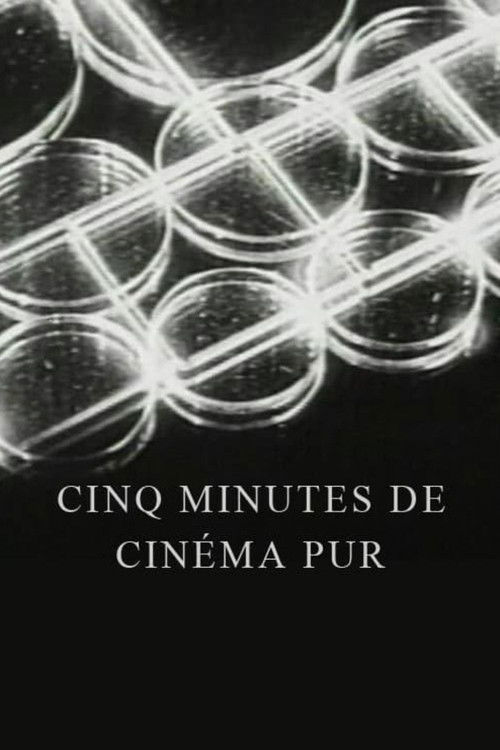
Five Minutes of Pure Cinema
1926
No user ratings available yet
Diversity score: 1.0 out of 10

1926
Not RatedDirector
Marcel Duchamp
Runtime
7 minutes
Average Rating
No ratings yetSynopsis
A spiral design spins. It's replaced by a spinning disk. These two continue in perfect alternation until the end: a spiral design, a disk. Each disk is labelled and can be read as it rotates. The messages, in French, feature puns and whimsical rhymes and alliteration. The final message comments on the spiral motif itself.
Overall Score
Fair
Category Breakdown
LGBTQ+ Representation
The film is a non-narrative experiment consisting of rotating geometric shapes and linguistic puns. It lacks characterization or interpersonal relationships, resulting in no discernible LGBTQ+ identities.
Gender Representation
Fragmented imagery of female faces and hands appears as aesthetic texture. However, these elements lack agency, making traditional gender hierarchies and the Bechdel test inapplicable.
Racial & Ethnic Diversity
The visual language is strictly abstract and geometric. While fragmented human imagery appears, it is stripped of all cultural, ethnic, or socioeconomic context.
Religious & Cultural Diversity
The film critiques traditional Western cinematic structures by prioritizing visual music over storytelling. Its Dadaist roots reject established institutional authority and conventional narrative logic.
Disability Representation
The work focuses entirely on kinetic abstraction and optical movement. There are no depictions of neurodivergence, physical disability, or mental health conditions.
Strengths
Areas for Improvement
AI Analysis
Marcel Duchamp’s experimental work operates outside the parameters of social representation. It functions as a formalist deconstruction of the medium rather than a vehicle for identity-based storytelling. While the film lacks character-driven agency or intersectional representation, its value lies in its radical subversion of established cinematic institutions. It challenges the hegemony of standard narrative architecture through linguistic play and geometric abstraction. Ultimately, the film's contribution to progressive values is found in its rejection of traditional, linear storytelling constraints rather than the depiction of specific social groups.
1926
1923
1952
1967

2014
1951
1949
1983

1978
1962
1968
1947
No reviews yet. Be the first to share your thoughts on this movie!
Use the rating form above to leave a star rating and optional review.