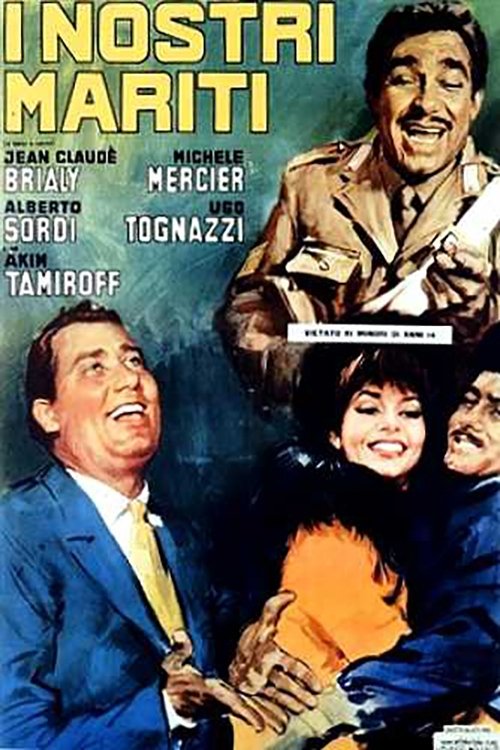
Our Husbands
1966
No user ratings available yet
Representation score: 3.0 out of 10
Representation Score
Minimal
1968
Director
Marino Girolami
Runtime
96 minutes
Average Rating
No ratings yetNew Showbiz Analysis
This comedic anthology mirrors the social norms of 1960s Italian society. The plot structure supports traditional elements like marriage, paternity, and inheritance without challenging them. The film leans on well-known comedic clichés centered around domestic life and lineage. It offers little exploration of diverse social identities or characters who reflect more than one aspect of diversity. Overall, the work adheres closely to the social frameworks of the time, emphasizing the preservation of family wealth and patriarchal stability.
Category Breakdown
The film centers on traditional marriage and biological family lines. It does not include any characters with non-traditional gender identities or same-sex relationships.
Women are mainly portrayed as objects of contention over domestic or financial matters. Their roles seem tied to marital status and maintaining patriarchal lineage.
The setting and characters suggest a uniform social environment. There is no indication of diverse ethnic backgrounds or multi-layered casting.
The story emphasizes traditional Western institutions like the nuclear family and legal marriage. It prioritizes social stability and the legitimacy of heirs.
There are no characters with visible or invisible disabilities in the film.
Present on Screen
Limited or Absent
Official Synopsis
A 3-episode film starring popular comedians Franchi and Ingrassia. In the first episode, Carlo and Oreste are married to the same woman; when she delivers twins, they fight for paternity. In the second episode, Celestina needs a heir to receive her dead husband's fortune. In the third episode, young widow Daisy arrives in Italy to meet her deceased much-older husband's family and ends up marrying his great-grandson.
1966
1973
1963
1980

1954
1964
1961
1988
No reviews yet. Be the first to share your thoughts on this movie!
Use the rating form above to leave a star rating and optional review.