
Casi Casados
1961
No user ratings available yet
Representation score: 3.0 out of 10
Representation Score
Limited
1965
Director
Luis César Amadori
Runtime
84 minutes
Average Rating
No ratings yetNew Showbiz Analysis
Luis César Amadori’s film is a standard mid-century romantic comedy that relies on established genre conventions. While it offers some character-driven ability to act, it does not seek to challenge social structures. The narrative focuses on interpersonal morality and the comedic consequences of deception. It operates within the traditional social hierarchies of its era rather than critiquing them. Ultimately, the film functions as a character study of infidelity. It adheres to the gendered and cultural norms of the 1960s without offering a progressive or postmodern perspective.
Category Breakdown
The film uses gender-bending as a comedic device through Luisa's 'Luisito' disguise. This serves a plot of mistaken identity rather than exploring queer identity or challenging assumptions about gender.
Luisa displays tactical intelligence and plays a significant role in driving the story by orchestrating a deception to confront infidelity. However, her motivations remain rooted in traditional romantic jealousy and gendered expectations.
The production features a homogeneous cast typical of mid-century romantic comedies. There is no evidence of diverse casting or the intentional blending of different ethnic identities.
The story uses socioeconomic disparity between a cabaret worker and an heiress as a comedic engine. It follows a conventional moral compass centered on romantic sincerity.
No visible or invisible disabilities are portrayed as central to the character arcs or the progression of the plot.
Present on Screen
Limited or Absent
Official Synopsis
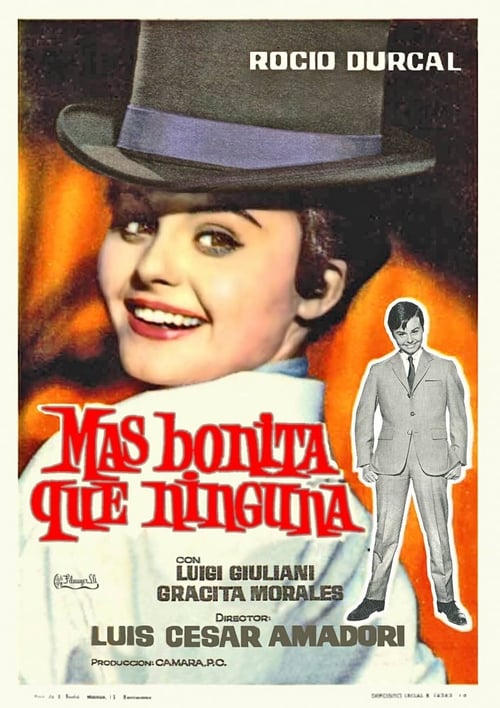
Roberto (Luigi Giuliani) and Luisa (Rocío Durcal) are a couple but are not as sincere as they should be. She tells him she works at Telefónica when she actually sells cigarettes at "The Green Windmill" cabaret. She's surprised when she discovers plans for a bachelor party there in honor of Roberto, who is marrying a wealthy heiress. In revenge, Luisa adopts the role of Luisito and faces Roberto in disguise.
1961
1955

1950

1960
1994
1959
1959
1950
No reviews yet. Be the first to share your thoughts on this movie!
Use the rating form above to leave a star rating and optional review.