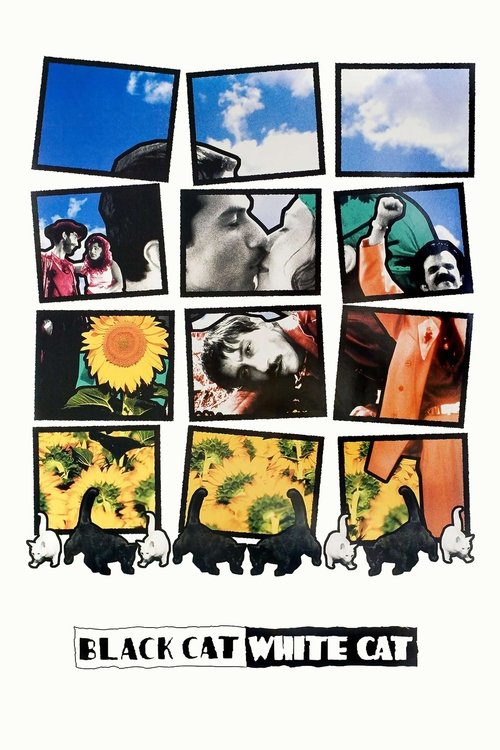
Black Cat, White Cat
1998
No user ratings available yet
Representation score: 4.5 out of 10

Representation Score
Fair
1981
Not RatedDirector
Emir Kusturica
Runtime
107 minutes
Average Rating
No ratings yetNew Showbiz Analysis
Emir Kusturica’s work provides a sophisticated, relativistic portrayal of human ability to act amidst the breakdown of traditional social and political structures. The film avoids sanitized historical narratives, opting instead for a chaotic, lived reality that prioritizes socioeconomic truth over idealized morality. While the film lacks specific LGBTQ+ or disability-focused narratives, its strength lies in its nuanced approach to gender and ethnic identity. It successfully challenges traditional clichés by centering on the friction between domestic stability and individual ability to act. Ultimately, the film's value is found in its cultural depth. It uses the multi-ethnic milieu of Sarajevo to explore identity through the lens of class and geography rather than monolithic ethnic categorization.
Category Breakdown
The film focuses on adolescent sexual awakening within an environment that assumes everyone is straight or cisgender. There are no explicit depictions of non-binary or same-sex relationships.
Female characters are portrayed as complex actors navigating a volatile landscape rather than passive domestic fixtures. The protagonist's relationship with a young prostitute challenges traditional views on femininity.
Set in 1960s Sarajevo, the film offers a nuanced portrait of Balkan identity. It emphasizes a communal, working-class existence that transcends singular ethnic identifiers through shared socioeconomic struggles.
The narrative presents a world where survival supersedes traditional institutional morality. It portrays family and state stability as constantly fluctuating, challenging traditional social order.
There are no prominent depictions of visible or invisible disabilities that drive the narrative or serve as central character arcs.
Present on Screen
Limited or Absent
Official Synopsis
Growing up in 1960s Sarajevo, a young man comes of age under the shadow of his good, but ailing father, but is attracted by the world of small-time criminals. He's hired to hide a young prostitute, whom he falls in love with.
1998

1986

1965

1990
1957

1986

2005
1971
No reviews yet. Be the first to share your thoughts on this movie!
Use the rating form above to leave a star rating and optional review.