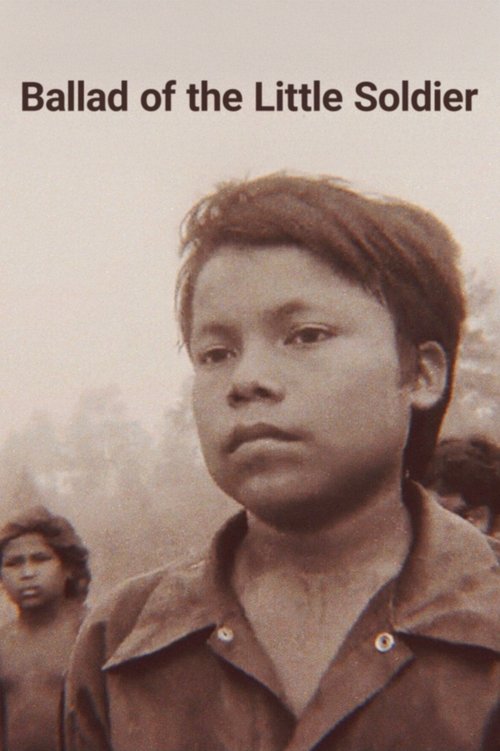
Ballad of the Little Soldier
1984
No user ratings available yet
Diversity score: 6.7 out of 10
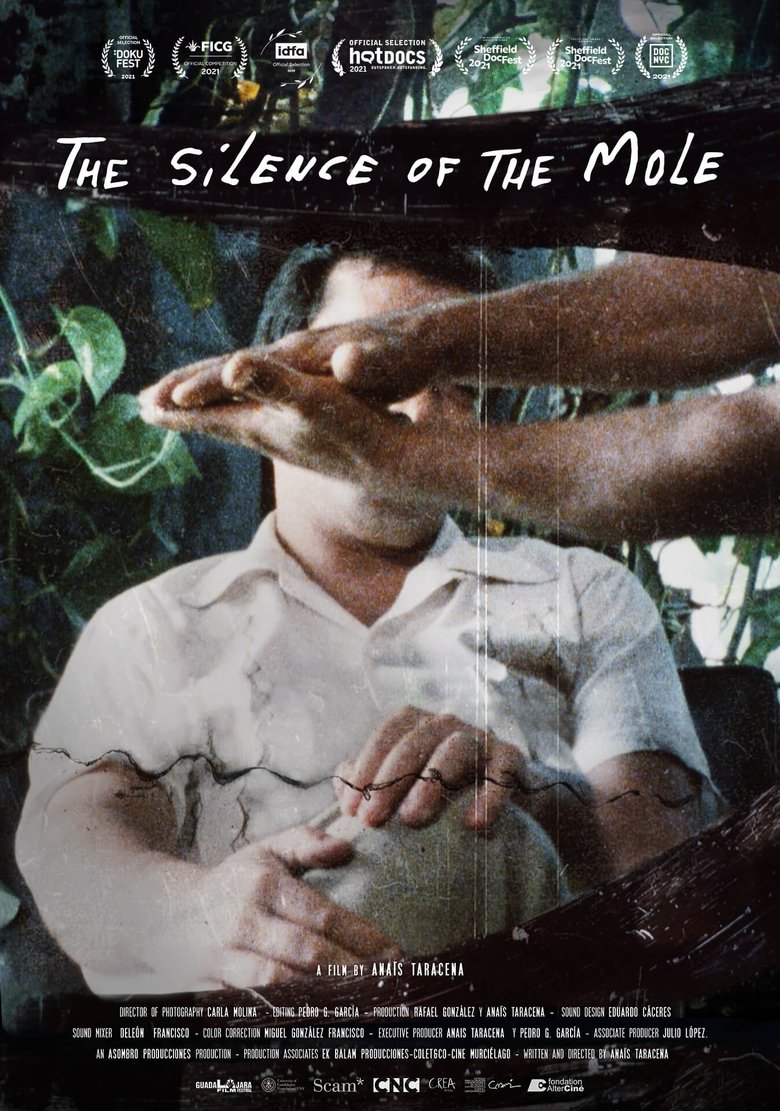
2021
Director
Anaïs Taracena
Runtime
91 minutes
Average Rating
No ratings yetSynopsis
Through some of the last interviews with him before his death, Guatemalan filmmaker Anaïs Taracena bravely and artfully pieces together Barahona's incredible, heroic story, as well as his testimony in 2014 on one of the worst urban massacres to take place during the war in Guatemala: the Spanish Embassy massacre in 1980.
Overall Score
Good
Category Breakdown
LGBTQ+ Representation
The documentary focuses on political testimony and historical massacres. There is no explicit mention of queer-specific narratives or LGBTQ+ characters within the film's scope.
Gender Representation
The narrative centers on Barahona's testimony regarding a historical massacre. While the primary subject is male, the film examines systemic violence that impacted civilian populations broadly.
Racial & Ethnic Diversity
The film provides high representation by centering a Guatemalan perspective. It prioritizes local agency and indigenous viewpoints to challenge Eurocentric gazes on Central American conflicts.
Religious & Cultural Diversity
The work deconstructs official government narratives by focusing on the 1980 Spanish Embassy massacre. It favors subjective, lived experiences over traditional Western-aligned state power structures.
Disability Representation
There is no visible or audible evidence regarding the portrayal of physical or neurodivergent disabilities in this documentary.
Strengths
Areas for Improvement
AI Analysis
The film serves as a vital piece of restorative media that disrupts conventional historical hierarchies. By centering a Latin American perspective on systemic violence, it provides a necessary counter-narrative to mainstream global media. Its strength lies in its commitment to racial and cultural agency within a post-colonial context. The documentary uses the Spanish Embassy massacre to examine the failures of state institutions and the complexities of historical truth. However, the film lacks specific evidence regarding LGBTQ+ themes or disability representation. The focus remains strictly on political testimony and the historical trauma of the Guatemalan war.
1984
2019
2018
2007
2012
2019
2011
2017
2019
1977
2008
2010
No reviews yet. Be the first to share your thoughts on this movie!
Use the rating form above to leave a star rating and optional review.