
Nobody's Boy: Remi (Movie)
1980
No user ratings available yet
Representation score: 3.2 out of 10
Representation Score
Excellent
2003
PG-13Director
Satoshi Kon
Runtime
92 minutes
Average Rating
No ratings yetNew Showbiz Analysis
Satoshi Kon’s animation uses magical realism to deconstruct rigid social hierarchies in urban Japan. By focusing on three individuals on the socioeconomic periphery, the film challenges conventional expectations of protagonist ability to act and social utility. The narrative excels at subverting traditional structures, particularly through its exploration of gender fluidity and critiques of capitalist institutions. It replaces legalistic morality with a nuanced look at situational ethics and communal survival. While the film lacks multi-ethnic casting due to its localized Tokyo setting, it compensates by providing deep representation of underrepresented identities, challenging the invisibility of those living outside formal societal structures.
Category Breakdown
Hana challenges traditional gender norms through her gender expression, expanding the narrative beyond binary constraints and integrating non-traditional identities into the emotional core of the story.
The film dismantles traditional hierarchies by emphasizing women's ability to drive the story through characters like Miyuki. It focuses on interpersonal connections and survival through meaningful dialogue between characters, avoiding patriarchal centering.
The story highlights the invisibility of underrepresented groups in the urban Japanese landscape, critiquing a society that renders the impoverished as non-entities.
Kon offers a critique of capitalist structures and institutional safety nets, prioritizing communal care and the concept of a 'found family' over traditional Western ideals of the nuclear family.
The film treats homelessness as a form of systemic social disability, depicting characters as active agents navigating a world that has functionally disabled their economic participation.
Present on Screen
Limited or Absent
Official Synopsis
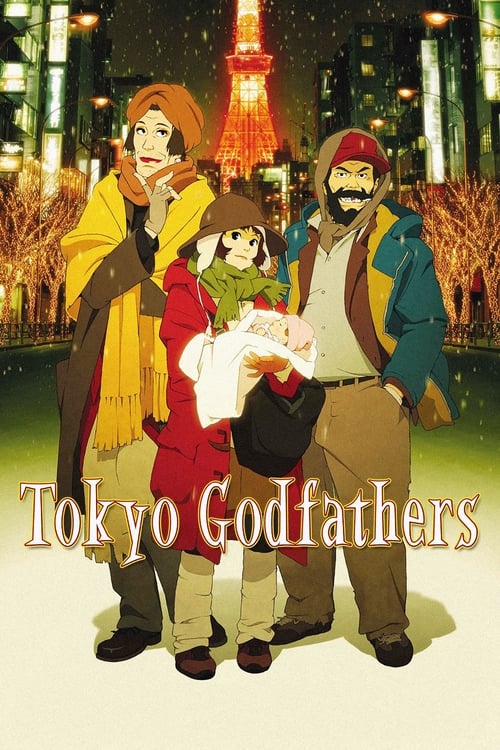
On Christmas Eve, three homeless people living on the streets of Tokyo discover a newborn baby among the trash and set out to find its parents.
1980

1970

2001

1999

2004

1921

2013

2008
No reviews yet. Be the first to share your thoughts on this movie!
Use the rating form above to leave a star rating and optional review.