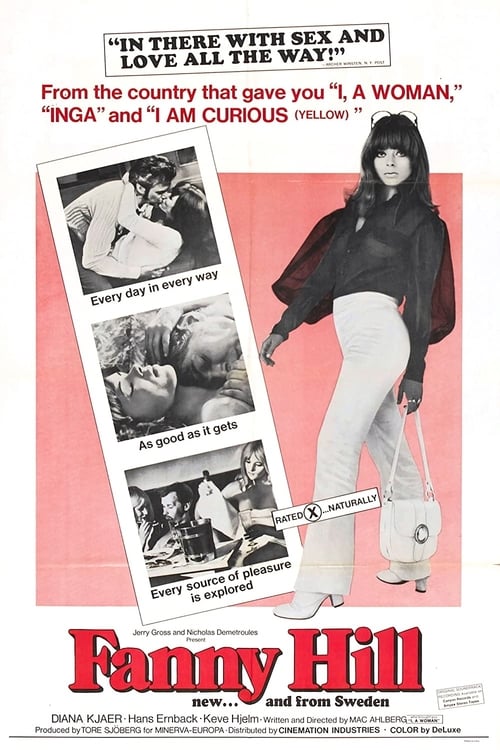
Fanny Hill
1968
No user ratings available yet
Representation score: 6.3 out of 10

Representation Score
Limited
1964
PG-13Director
Russ Meyer
Runtime
104 minutes
Average Rating
No ratings yetNew Showbiz Analysis
Russ Meyer's film centers on a protagonist who navigates a male-dominated society through her sexual awakening. It excels in portraying women's ability to drive the story and challenging rigid moral structures. However, the film remains limited by its historical context and genre-specific focus, lacking diversity in terms of race and LGBTQ+ representation.
Category Breakdown
The film does not include explicit representations of non-binary genders or same-sex relationships. Instead, it focuses on heterosexual relationships.
Fanny Hill is given a strong role in driving the story rather than being portrayed as a victim. The presence of Mrs. Brown and her household highlights a space where women have autonomy.
The cast is mainly made up of people from similar backgrounds, reflecting the 18th-century English setting and the production standards of 1964. There is no indication of intentional racial blending.
The film challenges traditional religious morality and social norms by presenting them as barriers to personal freedom. It emphasizes a secular exploration of human desire.
There are no prominent depictions of physical or neurodivergent disabilities that significantly impact the narrative.
Present on Screen
Limited or Absent
Official Synopsis
Young, pretty and innocent, Fanny Hill has lost her parents and must find her way in life amidst the perils of turbulent 18th-century London. She's fortunate enough to rapidly find a place as chambermaid of the effusive Mrs. Brown, who lives in a large house teeming with female 'relatives' in negligée and with very relaxed manners. She also insists that Fanny alone meets various gentlemen who show an ardent interest in her.
1968

1961

1970

1966

1969

1969

1976

1976
No reviews yet. Be the first to share your thoughts on this movie!
Use the rating form above to leave a star rating and optional review.