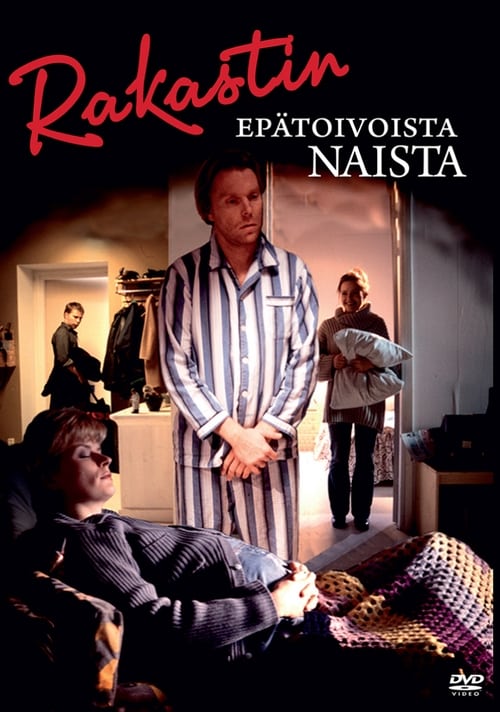
Rakastin epätoivoista naista
1999
No user ratings available yet
Representation score: 4.1 out of 10

Representation Score
Good
1994
Not RatedDirector
Aki Kaurismäki
Runtime
62 minutes
Average Rating
No ratings yetNew Showbiz Analysis
Aki Kaurismäki’s work focuses on the experiences of underrepresented individuals. By highlighting the 'outsider,' the film challenges conventional social hierarchies through a minimalist, dry style. The film effectively portrays displaced populations and critically examines Western urban capitalism. It finds dignity in the working class and underrepresented communities, questioning the stability of traditional institutions. However, the narrative does not explicitly address identity-based politics. There is a notable absence of LGBTQ+ representation or visible disability, limiting the film's progressive focus to class and migration.
Category Breakdown
The film does not prominently feature LGBTQ+ identities or non-conforming gender expressions. It explores urban alienation but does not include same-sex relationships or direct critiques of the assumption that everyone is straight or cisgender.
Gender dynamics are shown through equal, cooperative interactions. The film avoids strong patriarchal structures by focusing on the struggles of the working class rather than traditional family roles.
The film centers on Estonian and Russian characters living in Finland, disrupting the image of a homogeneous Nordic society by giving displaced populations a significant role.
The film criticizes modern capitalist systems by showing urban life as alienating. It grants more empathy to those on the fringes compared to rigid, formal state institutions.
There is no explicit depiction of neurodivergence or physical disabilities. The characters' struggles are framed through socioeconomic and existential issues rather than physical or mental impairments.
Present on Screen
Limited or Absent
Official Synopsis
Two Finnish men agree to drive an Estonian woman and a Russian woman to a harbor.
1999

1986

2000
1980

1995

1990

1964

1977
No reviews yet. Be the first to share your thoughts on this movie!
Use the rating form above to leave a star rating and optional review.