
Painted Lips
1974
No user ratings available yet
Diversity score: 5.7 out of 10
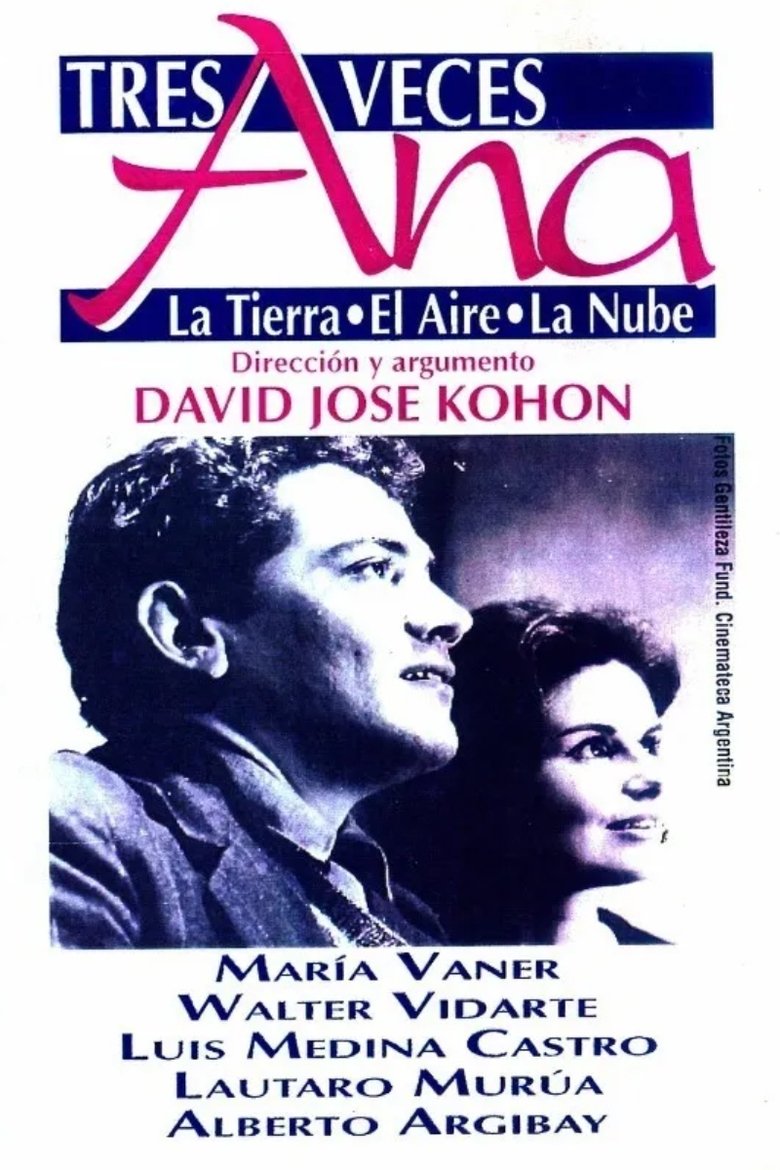
1961
Director
David José Kohon
Runtime
115 minutes
Average Rating
No ratings yetSynopsis
Three different love-related stories -all starring María Vaner as different "Anas". In "The Earth," Ana is a young and idealistic woman on the verge of adulthood when her first relationship with a clerk shatters her dreams of a romantic life. In "The Air," Ana is a rebellious, easy-living type among some beach bums whose sexual leanings tend to tip the scale at active promiscuity. In "The Cloud," Ana only exists in the imagination of an introverted man, who dreams of his ideal woman.
Overall Score
Fair
Category Breakdown
LGBTQ+ Representation
The film lacks explicit queer visibility or non-heteronormative characters. While 'The Air' explores sexual fluidity and promiscuity, the focus remains on heterosexual romantic disillusionment.
Gender Representation
The triptych format centers female subjectivity and agency. By exploring the 'Anas' as protagonists of their own emotional landscapes, the film subverts traditional patriarchal hierarchies.
Racial & Ethnic Diversity
Casting appears largely homogeneous, reflecting the demographic norms of the 1961 Argentine middle class. There is no evidence of significant racial blending or non-white casting.
Religious & Cultural Diversity
The narrative prioritizes existentialist values and individual psychology over religious dogma. It explores urban alienation as a critique of traditional Western social structures.
Disability Representation
There is no discernible evidence regarding the representation of physical or neurodivergent disabilities in this work.
Strengths
Areas for Improvement
AI Analysis
David José Kohon’s modernist character study succeeds by prioritizing female agency and psychological depth. The film's structure allows for a nuanced exploration of women's desires and disillusionment, moving beyond mere objects of the male gaze. However, the work is limited by the demographic constraints of its 1961 production context. The casting is largely homogeneous, and the film lacks explicit LGBTQ+ representation, which moderates its progressive impact. Ultimately, the film is a significant text for its era, using a secular, existentialist lens to challenge traditional social and gendered archetypes through its focus on urban alienation.
1974
2006
1955
1988

1988
1973
1953

1967

1960

1964

1983
2008
No reviews yet. Be the first to share your thoughts on this movie!
Use the rating form above to leave a star rating and optional review.