
Days of Glory
2006
No user ratings available yet
Representation score: 5.2 out of 10
Representation Score
Limited
2010
RDirector
Rachid Bouchareb
Runtime
137 minutes
Average Rating
No ratings yetNew Showbiz Analysis
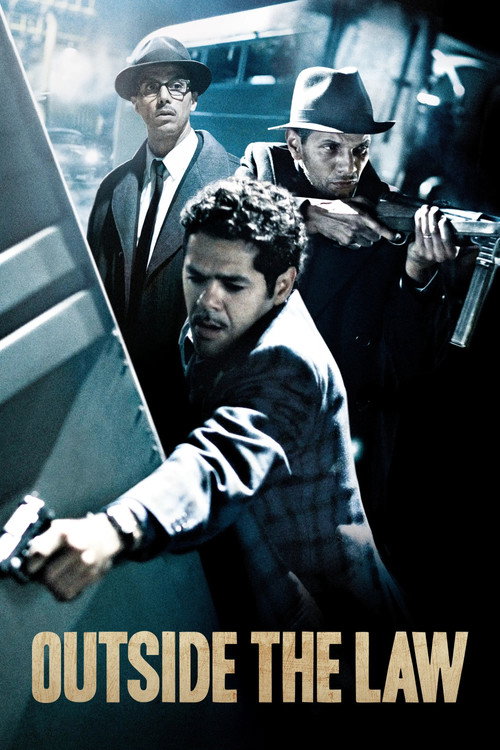
Outside the Law serves as a powerful piece of historical revisionism that centers the Maghrebi experience. By following three brothers through Indochina and France, the film successfully challenges the homogeneity of traditional period dramas and disrupts Eurocentric perspectives. The strength of the work lies in its sophisticated critique of colonial and capitalist institutions. It frames the characters' struggles not as mere criminality, but as necessary responses to systemic oppression and economic desperation. However, the film remains limited by conventional gender dynamics. While the matriarch provides a vital emotional anchor, the primary narrative momentum is driven by the male protagonists, adhering to traditional roles.
Category Breakdown
The film focuses on the historical and familial struggles of the Maghrebi diaspora. There is no presence of non-cisgender identities or narratives.
The story depicts traditional familial structures and the domestic pressures faced by the matriarch. While the mother is central to the family unit, the narrative focuses primarily on the brothers' trajectories.
The film excels by centering North African and Maghrebi identities. It disrupts Eurocentric historical lenses by prioritizing the ability to act of people of color within a global context.
The narrative is deeply rooted in post-colonial critique. It portrays Western institutional structures as exclusionary and frames the protagonists' actions as responses to systemic injustice.
There is no significant evidence regarding the portrayal of physical or neurodivergent disabilities within the narrative.
Present on Screen
Limited or Absent
Official Synopsis
After losing their family home in Algeria in the 1920s, three brothers and their mother are scattered across the globe. Messaoud joins the French army fighting in Indochina; Abdelkader becomes a leader of the Algerian independence movement in France and Saïd moves to Paris to make his fortune in the shady clubs and boxing halls of Pigalle.
2006

2012
2006
1998

2020

2012
2012

2022
No reviews yet. Be the first to share your thoughts on this movie!
Use the rating form above to leave a star rating and optional review.