Nicholas and Alexandra
1971
No user ratings available yet
Diversity score: 5.1 out of 10
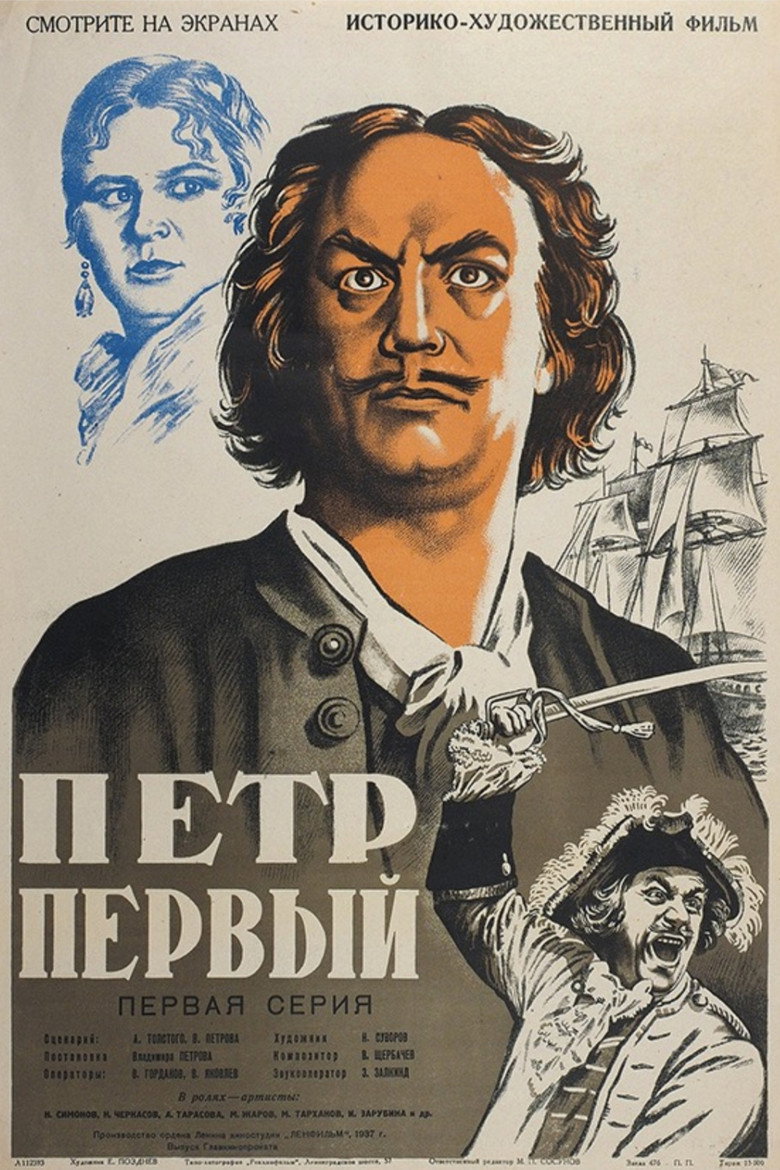
1937
Director
Vladimir Petrov
Runtime
145 minutes
Average Rating
No ratings yetSynopsis
This, the first Soviet depiction of Peter the Great, set the stage for what would become the post-Revolutionary line concerning the early Romanovs. Rulers like Ivan the Terrible and Peter the Great were widely admired for their dedication to Russia and their absolute determination to enhance her position in the world. But praise for the hated later Romanovs conflicted too heavily with the very beliefs that had brought about the Revolution in 1917.
Overall Score
Limited
Category Breakdown
LGBTQ+ Representation
The film adheres to a strictly heteronormative framework. There is no evidence of non-cisnormative identities or same-sex intimacy within the narrative.
Gender Representation
Peter I is framed as a decisive male leader within a patriarchal hierarchy. Female characters are largely relegated to domestic spheres or relational roles.
Racial & Ethnic Diversity
The cast is ethnically homogeneous, reflecting 18th-century Russian demographics. The narrative focuses on Slavic identity and the consolidation of a specific national identity.
Religious & Cultural Diversity
The film critiques the Russian Orthodox Church as a reactionary force. It frames the tension between religious tradition and secular modernization as a struggle for progress.
Disability Representation
There is no discernible focus on physical disabilities or neurodivergence. Characters function as archetypes of strength or resistance rather than exploring disability.
Strengths
Areas for Improvement
AI Analysis
This 1937 Soviet epic is a product of its specific ideological era, prioritizing state-building over modern intersectional representation. While it fails to provide visibility for LGBTQ+ individuals or diverse ethnic groups, it serves as a powerful tool for secularist critique. The film's strength lies in its deconstruction of pre-modern social structures. It actively challenges the authority of the Church and the 'old guard' to promote a centralized, modern state model. However, the film remains deeply traditional in its gender dynamics and ethnic homogeneity. It reinforces patriarchal power and a singular Slavic identity, reflecting the social mores of the 1930s Soviet Union.
1971

1942
1933
2011
1949
No reviews yet. Be the first to share your thoughts on this movie!
Use the rating form above to leave a star rating and optional review.