
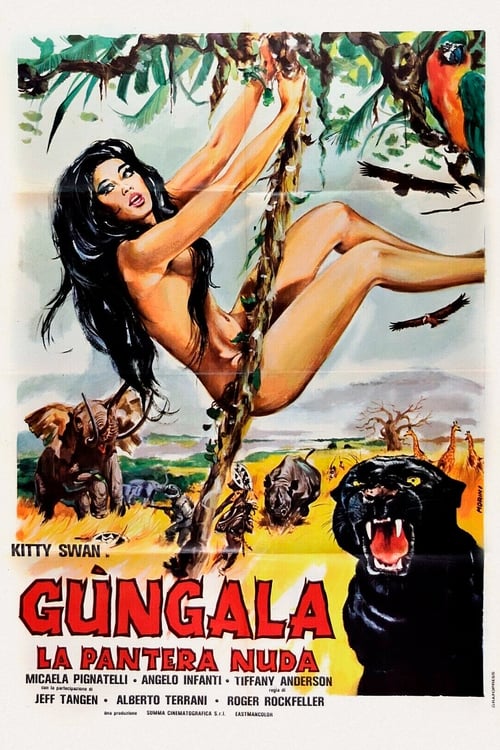
Tarzana: The Wild Woman
1969
No user ratings available yet
Representation score: 2.1 out of 10
Representation Score
Minimal
1968
Director
Ruggero Deodato
Runtime
88 minutes
Average Rating
No ratings yetNew Showbiz Analysis
Gungala, The Black Panther Girl follows the conventional adventure clichés of the late 1960s. Its narrative structure revolves around a Western expeditionary force entering a non-Western landscape to recover a lost individual, maintaining a traditional colonialist framework. The film emphasizes Western-centric perspectives, focusing on the ability to act of an English insurance company and a wealthy family. This approach upholds established power dynamics and social hierarchies without challenging them. Ultimately, the film reflects the cinematic standards of its time, using gendered and colonialist clichés to propel its adventure storyline.
Category Breakdown
The film adheres to traditional romantic storylines typical of 1960s adventure cinema. It does not explore LGBTQ+ identities or non-binary gender roles.
The female protagonist is portrayed as a 'lost heiress' needing rescue. This framing suggests her role is secondary to the male-led expeditionary team’s objectives.
The story centers on a wealthy English family's expedition into Africa. This setup emphasizes Anglo-centric views and traditional colonial hierarchies, lacking diverse perspectives.
The narrative focuses on Western institutions discovering and recovering artifacts. The involvement of a corporate insurance company highlights traditional Western capitalist structures.
There are no specific depictions of physical or neurodivergent characters in the film.
Present on Screen
Limited or Absent
Official Synopsis
An insurance company, led by a wealthy English family, organized an expedition to Africa to find a lost heiress who has been raised in the wild as Gungala and one of the explorers falls in love with her.
1969
1939
1956
1950
1932
1932

1977

1949
No reviews yet. Be the first to share your thoughts on this movie!
Use the rating form above to leave a star rating and optional review.