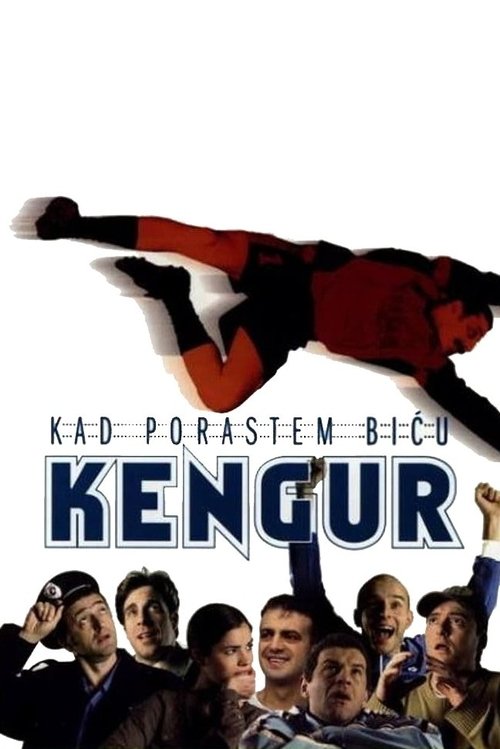
When I Grow Up, I'll Be a Kangaroo
2004
No user ratings available yet
Diversity score: 5.1 out of 10

1973
Director
Pál Sándor
Runtime
84 minutes
Average Rating
No ratings yetSynopsis
The film is set in Budapest, 1924. Laundryman Ede Minarik's only passion is football. His dream is to see his team, Csabagyöngye, qualify for the first division. For this goal he would be willing to sacrifice everything he has. But he has nothing, even footballers just barely. The team is just like the times. But still, "we need a team!"
Overall Score
Fair
Category Breakdown
LGBTQ+ Representation
The film lacks explicit depictions of queer identities or intimacy. While the protagonist's outsider status hints at a narrative space beyond strict heteronormativity, there is no overt representation.
Gender Representation
The story centers on a male-dominated sporting world. While it may subvert masculine archetypes by showing vulnerability, there is a notable lack of prominent female agency.
Racial & Ethnic Diversity
The setting reflects the demographic homogeneity of 1920s Budapest. The narrative prioritizes class-based struggles and the underdog experience over racial or ethnic intersectionality.
Religious & Cultural Diversity
The film excels by critiquing established institutions through a lens of social disruption. It uses the football team to reflect a fractured, transitioning society and its complex social organization.
Disability Representation
There is no evidence regarding the portrayal of physical or neurodivergent disabilities within the narrative.
Strengths
Areas for Improvement
AI Analysis
Pál Sándor’s comedy uses 1924 Budapest as a microcosm for post-WWI social fragmentation. By centering on a laundryman's pursuit of football glory, the film examines the tension between individual passion and rigid systemic pressures. The film's strength lies in its systemic critique. It frames the struggle for communal identity against an indifferent social landscape, using sport to deconstruct traditional nationalistic and institutional stability. However, the representation remains limited by its historical context. The focus on male-dominated sports and class-based struggle leaves little room for diverse gendered or racial perspectives.
2004
1971
2018
2000
1952
2020

1986
2018

1983
1983

2022
1994
No reviews yet. Be the first to share your thoughts on this movie!
Use the rating form above to leave a star rating and optional review.