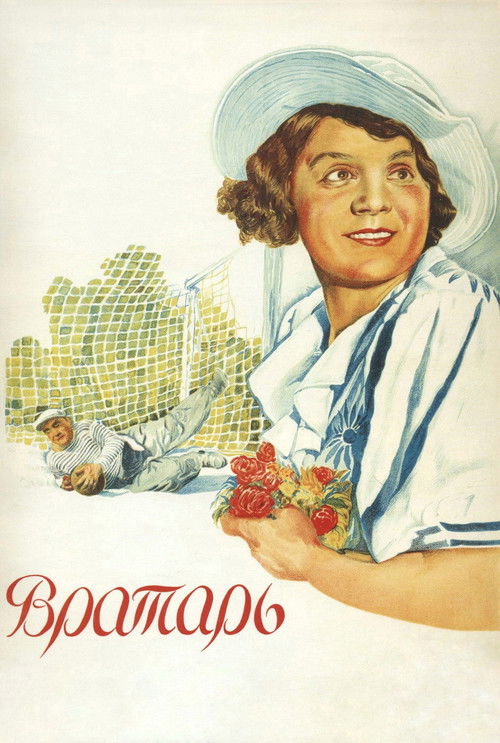
The Goalkeeper
1936
No user ratings available yet
Representation score: 2.0 out of 10
Representation Score
Limited
1952
Director
Márton Keleti
Runtime
102 minutes
Average Rating
No ratings yetNew Showbiz Analysis
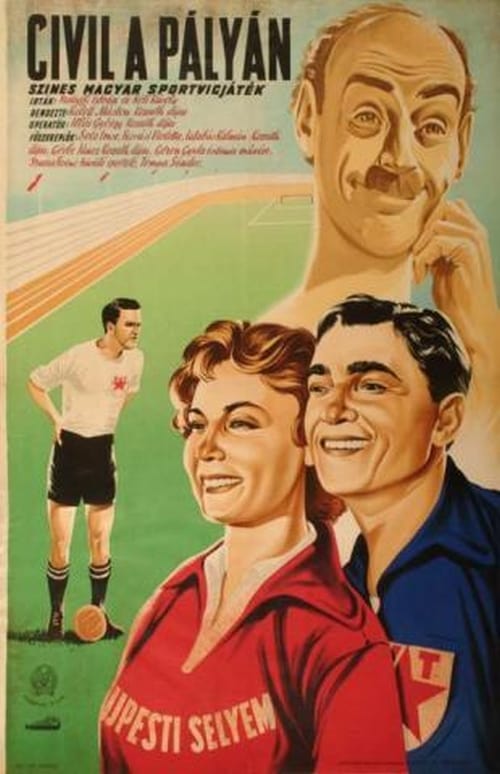
Try and Win is a product of the Socialist Realist movement in 1950s Hungary. Its narrative structure is designed to reinforce the value of collective labor, emphasizing the competition between outstanding workers and individualistic sports. While the film effectively conveys the specific socio-political culture of its era, it lacks complexity in representing diverse identities. It primarily focuses on masculine competition and the role of labor in society, reinforcing traditional social hierarchies.
Category Breakdown
The film does not include any LGBTQ+ characters or stories that go beyond the assumption that everyone is straight. It follows the traditional social structures of 1952 Hungarian cinema.
The story revolves around a rivalry between two men, Pista Rácz and Jóska Teleki. There are no women who play a significant role in driving the story or who challenge traditional gender roles.
The cast appears to be made up of people from similar ethnic backgrounds, reflecting the demographics of post-war Hungary. There are no non-white characters or actors playing roles traditionally held by white characters.
The film emphasizes the collectivist values of its time, focusing on the importance of brigade productivity over individual sports. This highlights the socio-political significance of workers in the Eastern Bloc.
There are no visible or invisible disabilities mentioned in the narrative. No characters with disabilities are utilized as plot devices or shown with ability to act.
Present on Screen
Limited or Absent
Official Synopsis
Pista Rácz, bearer of the title "outstanding workman" is opposed to all forms of sport, and is especially antagonized by Jóska Teleki, a first-class sportsman, who seems to be a drawback for Rácz's brigade in terms of work quantity performance figures.
1936
1967
1953
1976
1952
1927
1978

1963
No reviews yet. Be the first to share your thoughts on this movie!
Use the rating form above to leave a star rating and optional review.