Now You See It
1947
No user ratings available yet
Representation score: 0.0 out of 10
Representation Score
Minimal
1940
ApprovedDirector
George Sidney
Runtime
10 minutes
Average Rating
No ratings yetNew Showbiz Analysis
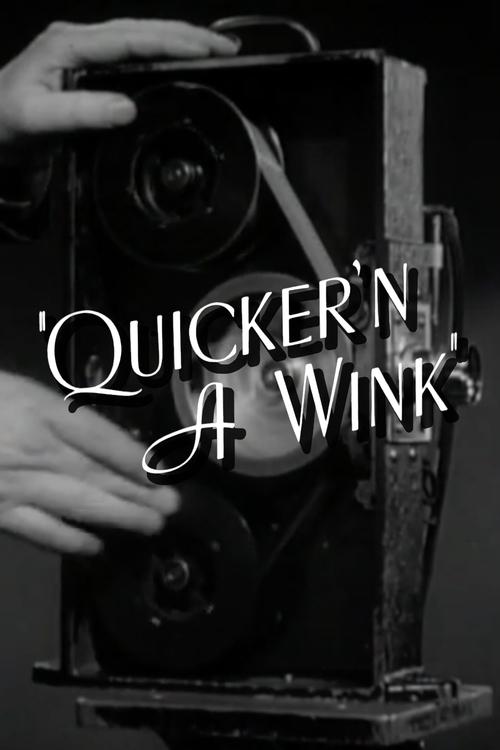
Quicker'n a Wink is a technical documentary focused on the physics of motion and the work of Dr. Harold E. Edgerton. The film demonstrates stroboscopic photography through high-speed captures of bullets and hummingbirds. Since the film's primary purpose is to showcase scientific phenomena, it lacks a traditional narrative structure and does not explore themes related to human identity or social representation. As a result, the film operates entirely outside the realm of identity politics and functions primarily as a visual novelty and educational tool.
Category Breakdown
The film focuses entirely on stroboscopic photography and scientific phenomena. It lacks character development, romantic subplots, or any exploration of gender identity.
Content is strictly instructional and observational. The subjects are inanimate objects or biological processes, leaving no room for gendered social hierarchies or roles.
The film serves as a scientific demonstration of high-speed motion. There is no cast or character interaction to allow for racial or ethnic exploration.
The work adheres to a purely educational framework. It does not engage with social institutions, religious morality, or any specific cultural ideologies.
No individuals with physical or neurodivergent traits are depicted. The film uses technology to augment visual perception rather than exploring lived experiences of disability.
Present on Screen
Limited or Absent
Official Synopsis
In this Pete Smith Specialty short, Dr. Harold E. Edgerton demonstrates stroboscopic photography, which he helped develop. This process allows us to see in slow motion what happens during events that occur too fast to be seen by the naked eye. Examples shown here include a bullet in flight as it shatters a light bulb, the moment of impact when a kicker kicks a football, and the motion of a hummingbird's wings as it hovers.
1947

1929
1941

1927
1883
1903
1905
1904
No reviews yet. Be the first to share your thoughts on this movie!
Use the rating form above to leave a star rating and optional review.