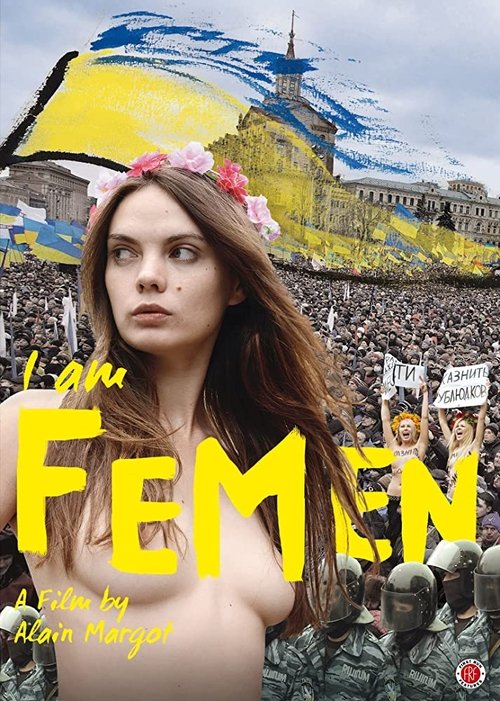
I Am FEMEN
2014
No user ratings available yet
Representation score: 6.9 out of 10
No Poster Available
Representation Score
Good
2005
PGDirector
Therese Shechter
Runtime
62 minutes
Average Rating
No ratings yetNew Showbiz Analysis
The film opens with the personal, confessional tone of a teenage radical revisiting her past, a framing device that immediately positions feminism as a lived, evolving identity rather than a static political doctrine. By juxtaposing the fiery archival footage of 1970s activists with the measured, often hesitant reflections of contemporary women, Shechter constructs a narrative where the "F-word" is both a badge of honor and a source of modern anxiety. The camera loves the older women’s unapologetic authority, treating their historical struggles as the moral foundation upon which current debates rest, while the younger subjects’ discomfort is presented not as failure, but as a necessary evolution of the movement’s language. The sold meaning is clear: feminism is a vital, if imperfect, tool for personal liberation, and its legacy is best understood through the lens of white, middle-class American experience. The film’s internal logic holds that the movement’s primary failure was not in its goals, but in its inability to remain inclusive and accessible, a critique that is voiced but not fully resolved by the on-screen evidence. The last image, returning to Shechter’s present-day reflection, settles the moral verdict: the fight for equality is ongoing, and the personal is still political. It is a warm, intellectual inventory of a movement’s soul, prioritizing the authenticity of its white, educated protagonists over a broader, more diverse representation of the women it claims to serve.
Category Breakdown
Queer history anchors the feminist timeline, yet the screen stays in the lecture hall. No couples kiss; the politics remain abstract.
Women command the frame and the argument. Men sit in the background, serving as targets for critique rather than active voices.
The film admits its white, middle-class roots but keeps the camera on familiar faces. Non-white voices are cited in text, not seen in the room.
Patriarchy is the villain, and autonomy is the prize. The critique stays historical, avoiding direct clashes with current religious or political power.
Bodily autonomy is the theme, but no disabled person appears. The issue remains a theoretical footnote, never a lived reality on screen.
Present on Screen
Limited or Absent
Official Synopsis
Why is it that some young, independent, progressive women in today's society feel uncomfortable identifying with the F-word? Join filmmaker Therese Shechter as she takes a funny, moving and very personal journey into the heart of feminism. Armed with a video camera and an irreverent sense of humor, Shechter talks with feminist superstars, rowdy frat boys, liberated Cosmo girls and Radical Cheerleaders, all in her quest to find out whether feminism can still be a source of personal and political power.
2014
2016
2011
2022
2018
2019
2016
2014
No reviews yet. Be the first to share your thoughts on this movie!
Use the rating form above to leave a star rating and optional review.