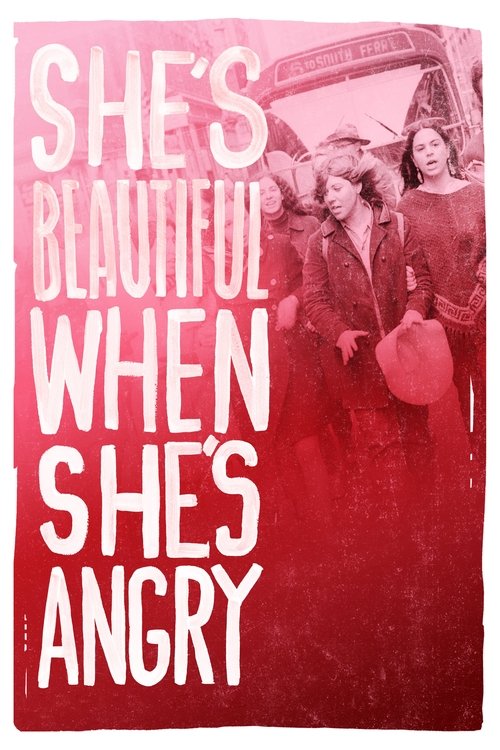
She's Beautiful When She's Angry
2014
No user ratings available yet
Representation score: 9.6 out of 10
Representation Score
Excellent
2018
Director
Johanna Demetrakas
Runtime
86 minutes
Average Rating
No ratings yetNew Showbiz Analysis
Johanna Demetrakas delivers a sophisticated documentary that uses archival photography to connect historical liberation movements with contemporary social structures. The film moves beyond simple inclusion, offering a systemic analysis of how identity, race, and gender intersect to challenge conventional hierarchies. The work is particularly strong in its engagement with racial and gendered power dynamics. By centering voices like Alice Walker and bell hooks, it avoids the trap of centering only white, middle-class perspectives, providing a necessary critique of racialized power within feminism. While the film excels in addressing gender and racial the way different parts of someone's identity overlap, it offers less depth regarding disability. The narrative prioritizes sociopolitical ability to act over specific neurodivergent or physical disability narratives, making it a specialized study of systemic social evolution.
Category Breakdown
The film explores the tension between mainstream feminism and queer identities. It looks at the historical conflict between lesbian visibility and traditional organizing, challenging the idea of a unified female experience.
This documentary challenges traditional gender hierarchies by examining the transition from domestic subordination to professional empowerment. It highlights women's intellectual strength and dismantles patriarchal leadership structures.
The narrative excels in showing how different parts of someone's identity overlap by featuring voices like bell hooks and Alice Walker. It critiques the tendency of mainstream movements to focus on white, middle-class perspectives.
The film critiques how organized religion and the nuclear family have historically enforced gendered subordination. It examines these traditional social structures through a lens of institutional oppression.
Representation of disability is present but lacks the central narrative weight seen in other categories. The focus remains primarily on sociopolitical identity and ability to act rather than specific physical or neurodivergent experiences.
Present on Screen
Limited or Absent
Official Synopsis
In 1977, a book of photographs captured an awakening - women shedding the cultural restrictions of their childhoods and embracing their full humanity. This documentary revisits those photos, those women and those times and takes aim at our culture today that alarmingly shows the need for continued change.
2014
2020

2010

2016
1971
2011

1971

2025
No reviews yet. Be the first to share your thoughts on this movie!
Use the rating form above to leave a star rating and optional review.