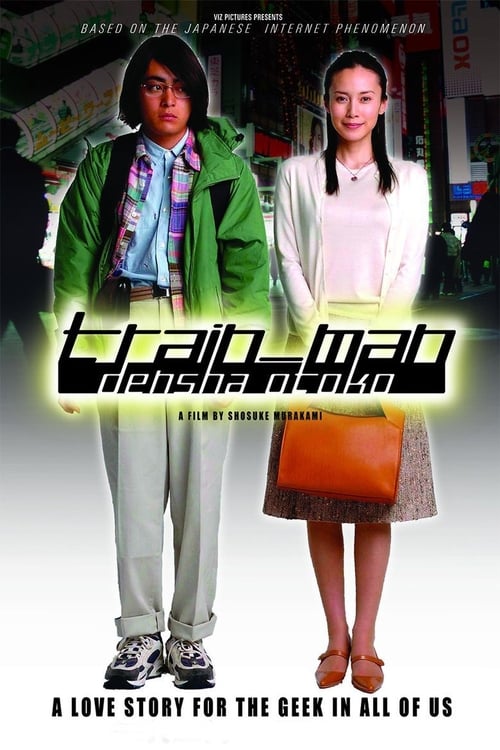
Train Man
2005
No user ratings available yet
Diversity score: 4.7 out of 10

2015
Director
Yuichi Satoh
Runtime
121 minutes
Average Rating
No ratings yetSynopsis
Ichiko is a 30-year-old unemployed woman. She meets Ryoichi at a drinking establishment. Even though he is a lot younger than her, she can't forget him. Meanwhile, Ichiko has 5 different characters in her brain that governs her actions. The 5 characters are Yoshida, Ishibashi, Ikeda, Hatoko and Kishi. These 5 character then have a fierce meeting. Yoshida presides over the meeting as the chairman. Ishibashi is the optimist. Ikeda is the pessimist. Hatoko is the character that lives in the moment and Kishi thinks about the past.
Overall Score
Fair
Category Breakdown
LGBTQ+ Representation
The story centers on a heteronormative romance between Ichiko and Ryoichi. There is no visible queer presence or subversion of traditional romantic structures within the narrative.
Gender Representation
The film prioritizes female subjectivity by centering the plot on Ichiko's internal psyche. It moves beyond romantic tropes to explore the complexities of a woman's internal agency.
Racial & Ethnic Diversity
As a localized Japanese production, the film operates within a relatively homogeneous social framework. It does not demonstrate a multi-ethnic or color-blind casting approach.
Religious & Cultural Diversity
The narrative uses psychological relativism to present identity as a fragmented construct. It bypasses traditional markers of success by focusing on an unemployed protagonist.
Disability Representation
The five internal characters serve as a metaphor for neurodivergence or psychological fragmentation. This grants significant agency to these personas, though it remains a comedic metaphor.
Strengths
Areas for Improvement
AI Analysis
Poison Berry in my Brain succeeds in deconstructing the unified self through its surrealist, internal-dialogue framework. By externalizing Ichiko's psyche into five distinct personas, the film offers a unique look at cognitive multiplicity and female agency. However, the film lacks breadth in its social representation. The narrative remains largely confined to a homogeneous cultural context and a heteronormative romantic arc, missing opportunities for broader intersectional engagement. Ultimately, the film's strength lies in its psychological architecture rather than its social diversity. It challenges traditional notions of identity and stability, even if it stays within a narrow demographic scope.
2005

2019

2017

2021

2015

2020

1996

2019

2020
2011

2004

2014
No reviews yet. Be the first to share your thoughts on this movie!
Use the rating form above to leave a star rating and optional review.