
Afro Tanaka
2012
No user ratings available yet
Diversity score: 4.8 out of 10
2011
Director
Hitoshi One
Runtime
118 minutes
Average Rating
No ratings yetSynopsis
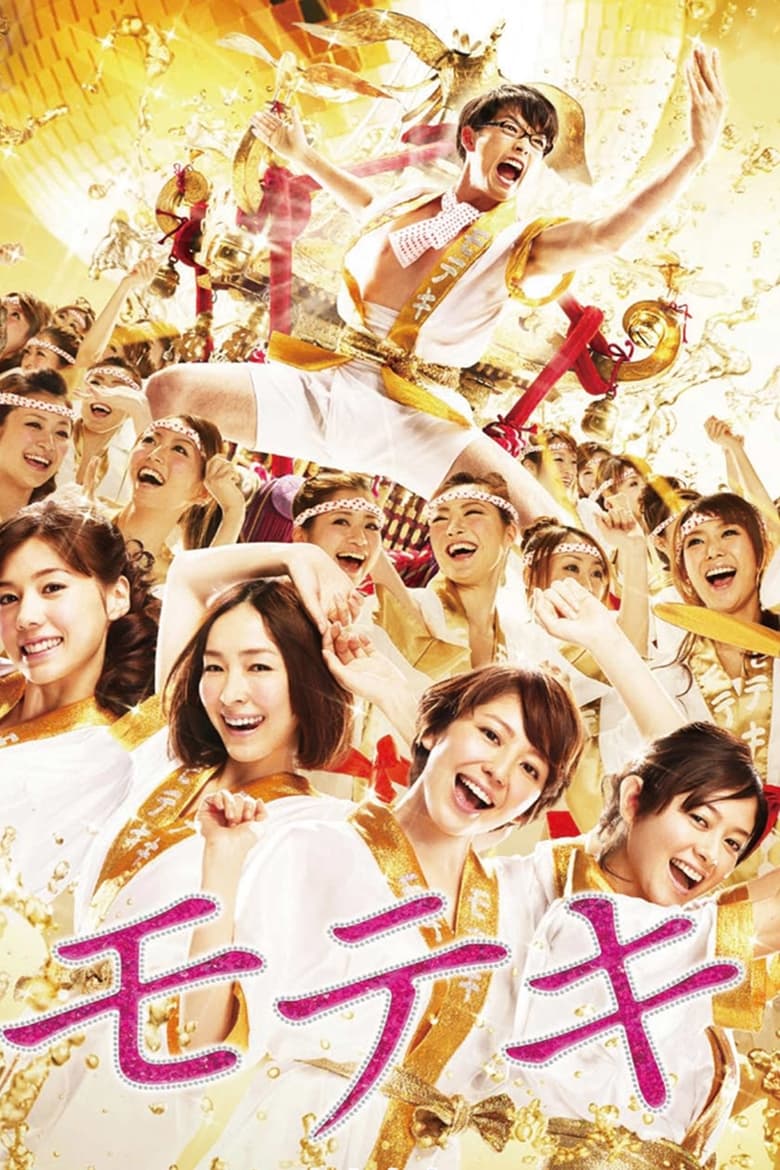
Set one year after the drama series "Moteki." 31-year-old Yukiyo Fujimoto doesn't have money, dreams or a girlfriend. He has left his job at a staffing firm and is attempting to start a new life by working as a writer for a news site. Suddenly, Yukiyo experiences "moteki" - a period when a man becomes suddenly popular with woman. Cute magazine editor Miyuki, pure and naive office worker Rumiko, beautiful shop assistant Ai and beautiful, but tough co-worker named Motoko all become interested in Yukiyo. He tries to calm down, but is shaken by the interests of these women.
Overall Score
Fair
Category Breakdown
LGBTQ+ Representation
The story centers on heteronormative romantic pursuits and the protagonist's sudden popularity with women. It lacks explicit LGBTQ+ identities or queer-focused critiques of social norms.
Gender Representation
The film subverts traditional masculine archetypes by featuring a directionless protagonist who lacks financial or professional stability. Female characters possess diverse temperaments and significant social agency.
Racial & Ethnic Diversity
The cast and setting are largely homogeneous, reflecting the demographic realities of a domestic Japanese urban production. It functions as a localized character study without multicultural blending.
Religious & Cultural Diversity
The narrative critiques the rigid salaryman lifestyle and conventional career paths. It prioritizes individualistic desires over traditional values of social harmony and institutional loyalty.
Disability Representation
There are no prominent characters with visible or invisible disabilities. The protagonist's social awkwardness is treated as a romantic comedy trope rather than an exploration of disability.
Strengths
Areas for Improvement
AI Analysis
Love Strikes! succeeds in deconstructing the traditional Japanese 'salaryman' archetype. By centering on a man who lacks leadership or stability, the film shifts power dynamics toward a diverse group of female characters with distinct social agency. However, the film remains limited by its demographic homogeneity and lack of explicit LGBTQ+ representation. It functions primarily as a localized character study that adheres to the demographic realities of its urban Japanese setting. Ultimately, the film's strength lies in its skepticism toward rigid social hierarchies and its focus on individualistic, often irrational, human desires over institutional conformity.
2012

2020

2013

2015

2013

2017
No reviews yet. Be the first to share your thoughts on this movie!
Use the rating form above to leave a star rating and optional review.