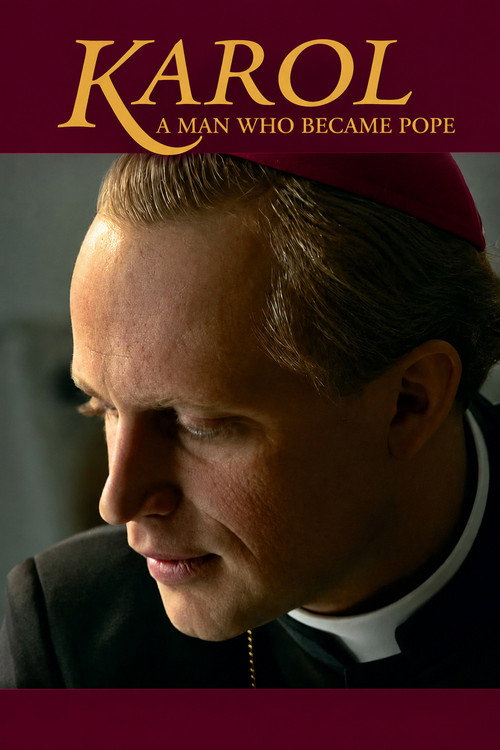
Karol: A Man Who Became Pope
2005
No user ratings available yet
Representation score: 0.6 out of 10
Representation Score
Minimal
1981
Director
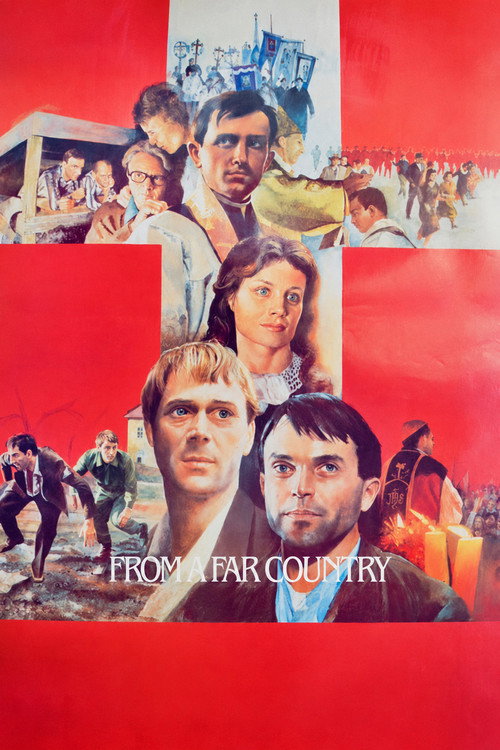
Krzysztof Zanussi
Runtime
140 minutes
Average Rating
No ratings yetNew Showbiz Analysis
From a Far Country is a traditional biographical drama that emphasizes historical and religious accuracy. The film follows the life of Karol Wojtyla, focusing on his rise to the papacy and his fight against communist repression. Because the story is set within a specific Polish socio-political context and the sanctity of the Catholic Church, it adheres closely to the institutional hierarchies of the period. This focus on historical context leads to a narrative that upholds traditional Western values rather than exploring multiple aspects of identity.
Category Breakdown
The film focuses on the life of a religious figure within a traditional Catholic framework. It does not include any non-straight or non-cisgender identities or critiques of the assumption that everyone is straight or cisgender.
Female characters play supporting roles, often appearing in connection to the protagonist’s spiritual journey. The film’s power structures mirror the social hierarchies of the time.
The cast is made up of actors with similar ethnic backgrounds, reflecting the film’s specific Polish historical setting. There is no attempt to diversify the cast or change the ethnicity of characters.
The story highlights the Roman Catholic Church as a central moral authority. It emphasizes traditional values and religious devotion over secular political ideologies.
The film does not feature any characters with physical or neurological disabilities as central narrative elements.
Present on Screen
Limited or Absent
Official Synopsis
This heroic story follows the life of Karol Wojtyla, a Polish Roman catholic who ascends the throne of St. Peter as Pope John Paul II. As a young boy, Karol is a bright and talented student. Archbishop Sapieha recognizes the very special, moving qualities Karol possesses and encourages him to consider the priesthood. Although determined to study Polish literature, Karol turns to the church; he is ordained and studies in Italy, France, and Belgium. Torn by fear and repression in post-Stalin Eastern Europe, Karol becomes a poisonous thorn in the communists' side. His deer reverence and commitment return him to Poland as Pope John Paul II.
2005
1972
2003
1991
1984
2023
2006
2013
No reviews yet. Be the first to share your thoughts on this movie!
Use the rating form above to leave a star rating and optional review.