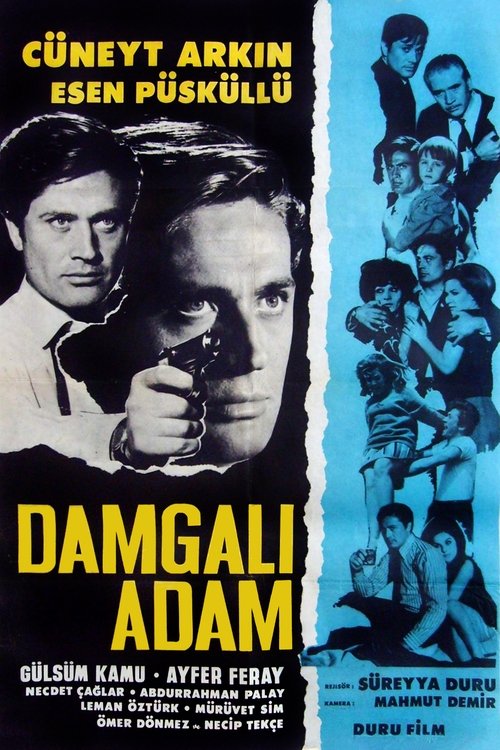
Damgalı Adam
1966
No user ratings available yet
Representation score: 0.0 out of 10
Representation Score
Limited
1965
Director
Atıf Yılmaz
Runtime
82 minutes
Average Rating
No ratings yetNew Showbiz Analysis
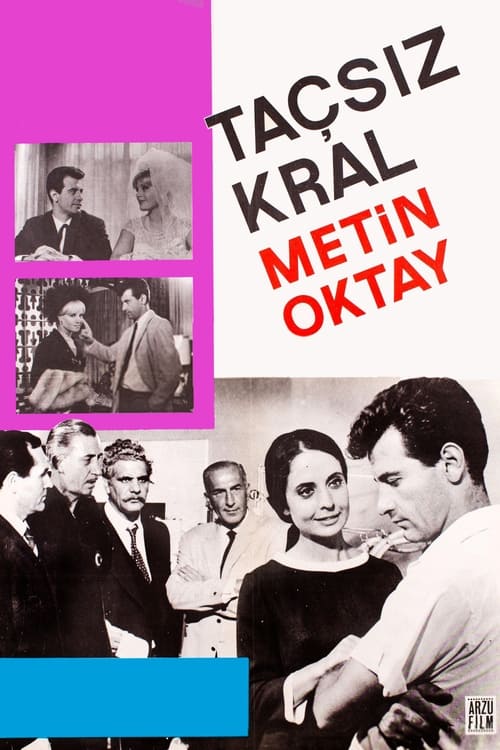
Taçsız Kral is a product of its era, reflecting the demographic homogeneity and social hierarchies of 1960s Turkish cinema. The film operates within a conventional framework, focusing on the cultural transitions of a modernizing society. While the film lacks explicit representation of LGBTQ+ identities or diverse racial casting, Atıf Yılmaz’s directorial style introduces a layer of psychological depth. This approach moves the work away from the most reductive archetypes found in standard melodramas of the period. Ultimately, the film serves as a window into the traditional social structures of the time, balancing established cultural norms with emerging complexities in human relationships.
Category Breakdown
The film does not include any clear evidence of queer narratives or non-cisgender identities. It follows the straight-centered social structures typical of mid-1960s Turkish cinema.
Female characters likely navigate traditional patriarchal roles and domestic struggles. However, the director's focus on psychological realism suggests a potential for more nuanced roles.
Casting appears ethnically homogeneous, reflecting the domestic demographic of the era. There is no indication of casting intended to disrupt traditional hierarchies.
The narrative explores the tension between traditional morality and modernizing societal values. This friction provides a level of moral complexity beyond simple didacticism.
There is no verifiable evidence of characters with visible or invisible disabilities serving as central narrative elements or significant plot devices.
Present on Screen
Limited or Absent
1966

1965
1972
1977

1956

1984
1974
1993
No reviews yet. Be the first to share your thoughts on this movie!
Use the rating form above to leave a star rating and optional review.