
Khrustalyov, My Car!
1999
No user ratings available yet
Representation score: 6.3 out of 10
Representation Score
Good
2011
Director
Leander Haußmann
Runtime
102 minutes
Average Rating
No ratings yetNew Showbiz Analysis
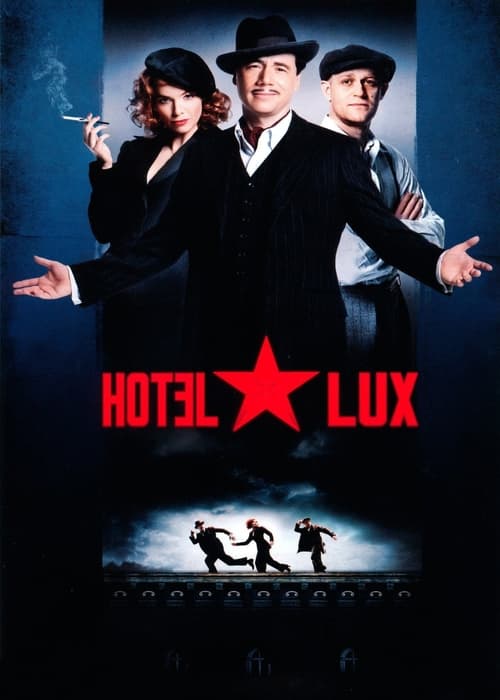
Hotel Lux serves as a sharp historical critique that deconstructs class and racial hierarchies. By setting the story in Moscow, the film challenges the homogeneity of Western narratives and highlights the systemic oppression faced by ethnic minorities. The film excels at subverting traditional social orders, particularly through its portrayal of women as politically driven agents rather than passive figures. It uses the microcosm of the Hotel Lux to examine the moral instability of the era's elite. While the film explores the fluidity of identity through impersonation, it lacks overt LGBTQ+ representation.
Category Breakdown
The film focuses on political survival and impersonation but lacks explicit depictions of LGBTQ+ identities or non-cisgender gender expressions.
Women like Frida are shown as passionate communists with significant roles in driving the story. The film avoids submissive clichés by presenting women as active participants in political struggles.
The Moscow setting contrasts Nazi 'Aryan' ideals with an internationalist landscape. It highlights systemic victimization by centering the tension between Jewish characters and the Nazi regime.
The narrative offers a sophisticated critique of Western institutions and capitalist structures. It frames the struggle of idealists against nationalism and systemic oppression.
There is no significant evidence regarding the portrayal of physical or neurodivergent disabilities in the narrative.
Present on Screen
Limited or Absent
Official Synopsis
In 1938 Hans Zeisig, an apolitical comedian, impersonator and cabaret actor, flees with a Russian passport (instead of American, which he would have preferred) from Nazi-Berlin, and finds himself in the legendary Hotel Lux, the 'lost paradise' of the Comintern, in Moscow. Everyone believes that Zeisig is a man named Hansen, Hitler's personal astrologer. But Zeisig quickly realizes that he's gone from the frying pan into the fire. In the Hotel Lux he meets his friends Frida and later Meyer again, still passionate communists. For the three idealists an adventure between love and death begins to run his course.
1999

2002

2015
1956
1987
1942
1978
1983
No reviews yet. Be the first to share your thoughts on this movie!
Use the rating form above to leave a star rating and optional review.