
Schoolgirl Apocalypse
2011
No user ratings available yet
Representation score: 5.5 out of 10
Representation Score
Fair
2018
Director
Junpei Tsuchida
Runtime
115 minutes
Average Rating
No ratings yetNew Showbiz Analysis
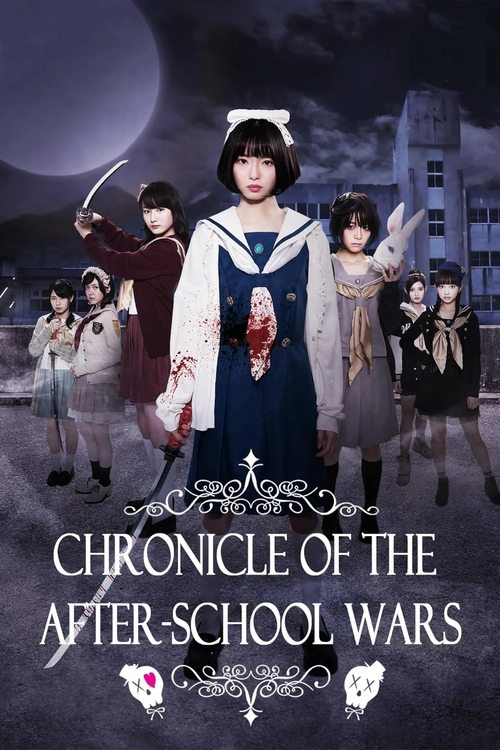
Chronicle of the After-School Wars is a survival horror that finds its strength in female-driven autonomy. By placing an all-female cast at the center of a lethal competition, the film bypasses traditional patriarchal hierarchies and focuses on female-led decision-making. However, the film's diversity is limited by its homogeneity. The lack of visible racial or ethnic variety and the absence of disability representation result in a narrower demographic scope. Ultimately, the film succeeds as a subversion of social order. It uses the breakdown of a school setting to explore conflict, though it relies heavily on subtext rather than explicit representation for its LGBTQ+ elements.
Category Breakdown
The bond between Sena and Yudachi is shown through the exchange of a handkerchief, suggesting a deep emotional connection. However, the film does not explicitly confirm their non-straight relationship.
The film centers an all-female cast, giving them significant control in a survivalist struggle. By removing male figures, it avoids traditional patriarchal structures and subverts the damsel in distress cliché.
The narrative focuses on a localized, homogeneous group within a school setting. There is no evidence of a multi-ethnic or diverse cast.
The story portrays established social structures as fragile by transforming a school into a site of lawlessness. This deconstruction of institutional stability drives the central conflict.
The film provides no information regarding characters with physical, sensory, or neurodivergent disabilities.
Present on Screen
Limited or Absent
Official Synopsis
It is not Tag. It is not Battle Royale. It is Battle Royale Tag. Sena walks up to the school rooftop to return Yudachi's handkerchief. Yudachi is not there and Sena falls asleep waiting. It is dark, she is confined and locked up at her school when Sena wakes up. The school has turned bloody red and the girls have to fight to the death. Who will survive the carnage is up to the girls.
2011
2005
2000

2014
2020

2011
2017
2005
No reviews yet. Be the first to share your thoughts on this movie!
Use the rating form above to leave a star rating and optional review.