
A Fistful of Grapes
2016
No user ratings available yet
Representation score: 2.9 out of 10
Representation Score
Limited
1999
Director
Mario Monicelli
Runtime
110 minutes
Average Rating
No ratings yetNew Showbiz Analysis
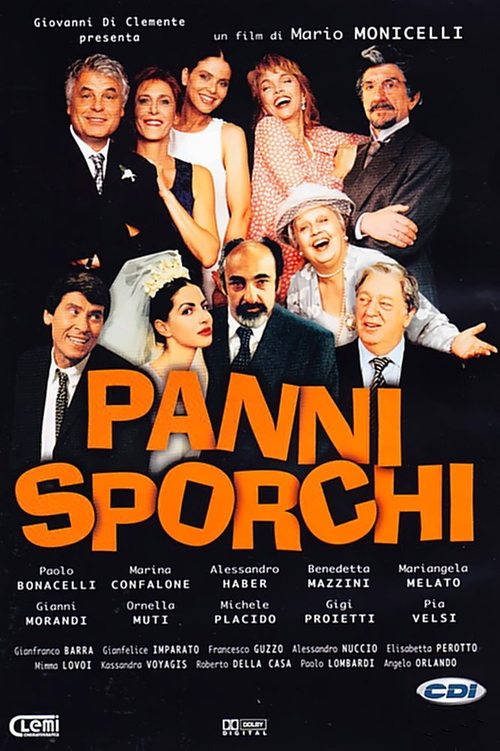
Dirty Linen serves as a social satire focused on the tension between individual aspirations and systemic economic realities. It prioritizes the critique of globalization and the pressures of the Unified European Market over demographic variety. The film's narrative is rooted in the struggles of the working class and the decline of small-scale industry. While it offers meaningful socio-economic commentary, it remains within the conventional social frameworks of its era. Ultimately, the work functions as a study of economic transition rather than a vehicle for diverse representation, resulting in a narrow demographic scope.
Category Breakdown
The film does not include any explicit LGBTQ narratives or non-cisgender identities. It focuses on traditional family and economic structures.
The story centers around a family-run confectionery business, likely adhering to patriarchal models. There is little indication of challenging traditional gender hierarchies.
Set in Macerata, Italy, the film reflects a homogeneous social landscape. The central Razzi family shows no signs of significant ethnic diversity.
The narrative provides a critique of Western economic structures and capitalist expansion. It explores how systemic shifts destabilize traditional, local ways of life.
There is no evidence that disability or neurodivergence plays a role in the character arcs or the central plot.
Present on Screen
Limited or Absent
Official Synopsis
The Razzi family owns a small factory of sweets in Macerata. Their desire to enlarge their business to cope with the new Unified European Market brings to a string of fatal mistakes that will ultimately doom their wealth.
2016
1983

2017
1975

1959

1969

1992

1984
No reviews yet. Be the first to share your thoughts on this movie!
Use the rating form above to leave a star rating and optional review.