
Jenaro, el de los 14
1974
No user ratings available yet
Diversity score: 2.3 out of 10
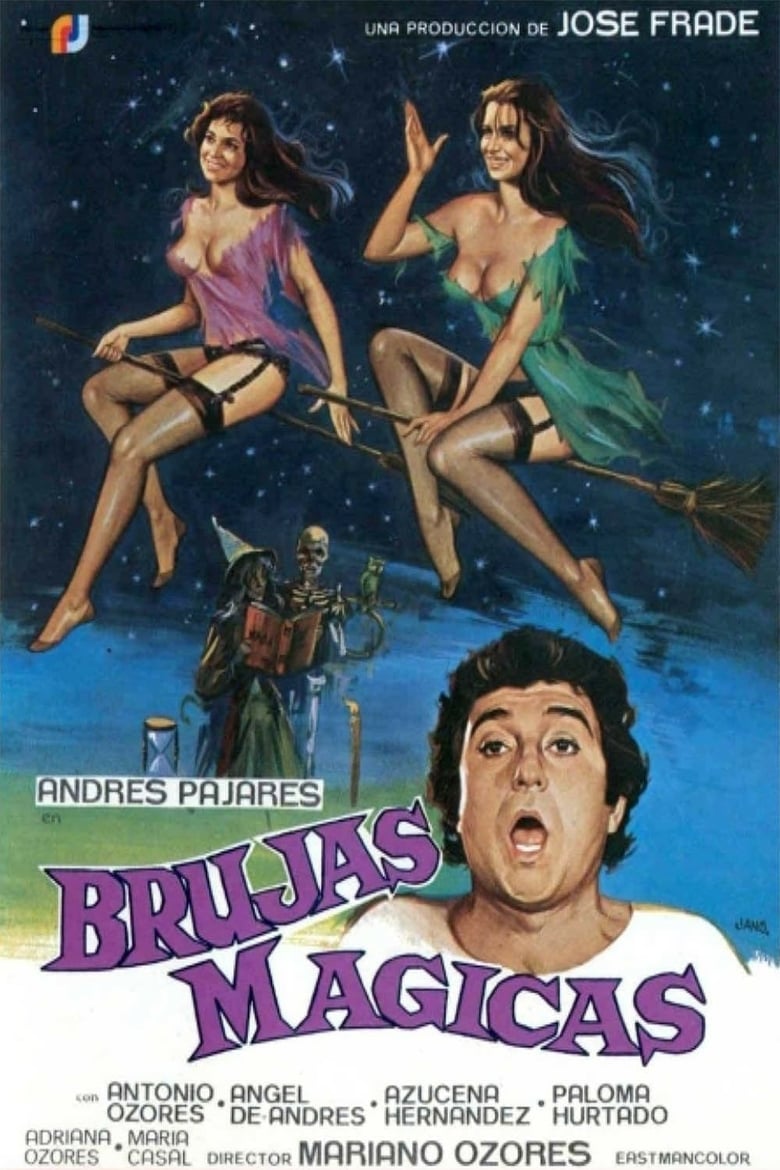
1981
Director
Mariano Ozores Puchol
Average Rating
No ratings yetSynopsis
In the year 1595, in a Spanish village lives the miller Diego, irresistible to the local girls. Meanwhile, a friar arrives in the village on his way to Santiago de Compostela, and is mistaken for a man sent by the Inquisition.
Overall Score
Limited
Category Breakdown
LGBTQ+ Representation
The film focuses on heterosexual romantic pursuits, specifically the miller Diego's charm with local women. There is no evidence of non-cisnormative identities or narratives that challenge heteronormativity.
Gender Representation
The narrative centers on a male protagonist and his effect on women. While women are active in the village, their roles appear centered around their attraction to the male lead.
Racial & Ethnic Diversity
Set in a 16th-century Spanish village, the film likely reflects the homogeneous ethnic composition of the era. It presents a conventional Western European social structure without evidence of diverse casting.
Religious & Cultural Diversity
The plot uses the Inquisition as a comedic catalyst for situational humor. The focus remains on a traditional, localized social order rather than a systemic critique of religious institutions.
Disability Representation
The available information provides no mention of characters with visible or invisible disabilities. Consequently, no representation in this category can be identified.
Strengths
Areas for Improvement
AI Analysis
Magical Witches operates within the traditional comedic frameworks of 1981 Spanish cinema. The story relies on established social archetypes and historical settings that prioritize conventional hierarchies and heteronormative romantic structures. The film's narrative architecture centers on religious tension and mistaken identity involving a friar and the Inquisition. However, these elements serve as drivers for situational humor rather than tools for social or institutional critique. Ultimately, the work adheres to the demographic and social norms of its period setting, offering a conventional portrayal of 16th-century Spanish village life.
1974
1987
1973
1984
1983

1970
1982
1979

1985
1982
1985
1983
No reviews yet. Be the first to share your thoughts on this movie!
Use the rating form above to leave a star rating and optional review.