
SK1
2015
No user ratings available yet
Representation score: 3.1 out of 10
Representation Score
Fair
2002
Director
Kai S. Pieck
Runtime
81 minutes
Average Rating
No ratings yetNew Showbiz Analysis
The film serves as a clinical, psychological character study of a serial killer. It prioritizes a deconstruction of morality and systemic trauma over traditional narrative redemption. While the work offers depth regarding psychological determinism and the failure of social institutions, it lacks demographic breadth. The focus remains strictly on a specific historical and masculine context. Ultimately, the film's complexity lies in its refusal to provide a redemptive arc, opting instead to examine how environment molds anti-social behavior.
Category Breakdown
The film explores same-sex dynamics through the lens of criminal pathology. These interactions are framed by the protagonist's crimes rather than the individuals' roles in driving the story.
The narrative is heavily male-centric, focusing on masculine trauma and violence. It operates within a narrow vacuum of male predators and victims, emphasizing a narrow perspective on gender.
Set in 1960s Germany, the film reflects the demographic homogeneity of its historical period. There is no evidence of intentional ethnic blending.
The story critiques social structures by portraying the failure of traditional protective institutions. It deconstructs the idea of the stable family unit, showing how social structures can fail.
The film examines severe mental health conditions through the protagonist's psychopathy. It risks focusing on the destructive nature of pathology over the individual's ability to drive the story.
Present on Screen
Limited or Absent
Official Synopsis
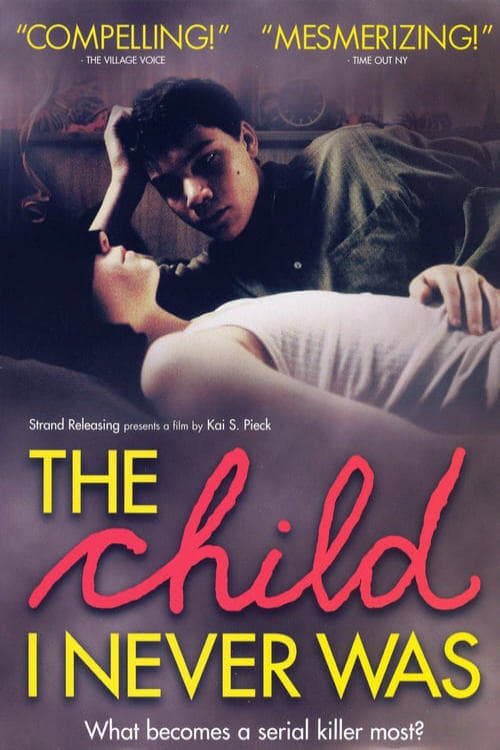
A serial killer dispassionately discusses the nuts and bolts of his grisly avocation, as well as the youthful traumas which helped to mold him into a psychopath, in this disturbing independent drama from Germany, based on the true story of of Germany's most famous child murderer Juergen Bartsch who, between the ages of 15 and 19, abused, tortured and killed four schoolboys in the Ruhr region of Germany from 1962 to 1966.
2015

2005
2017

1971
1973
2017

2023
2003
No reviews yet. Be the first to share your thoughts on this movie!
Use the rating form above to leave a star rating and optional review.