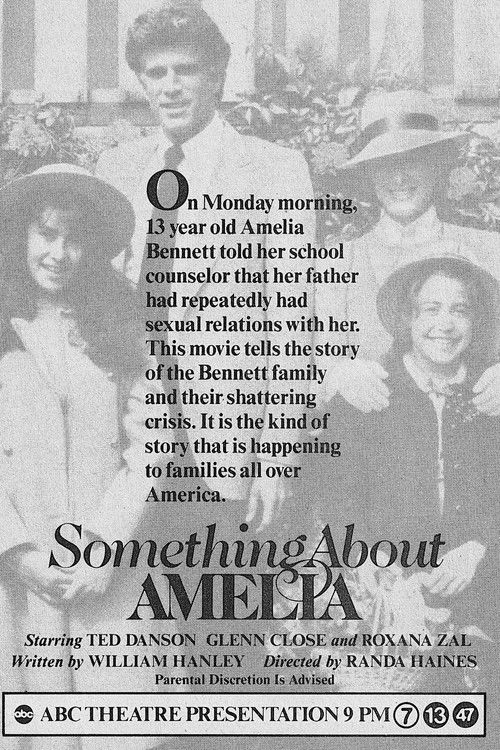
Something About Amelia
1984
No user ratings available yet
Representation score: 5.4 out of 10

Representation Score
Good
1997
RDirector
Peter Kosminsky
Runtime
83 minutes
Average Rating
No ratings yetNew Showbiz Analysis
No Child of Mine is a specialized social realist drama that prioritizes systemic critique over broad demographic representation. It excels in its examination of institutional failures and the psychological complexities of trauma, particularly through the lens of mental health and female professional ability to act. However, the film is limited by its narrow demographic scope. The lack of racial and LGBTQ+ representation keeps the narrative focused on a specific, homogeneous social context, which restricts its multi-layered breadth. Ultimately, the film's strength lies in its deconstruction of the nuclear family and the state, offering a deep, albeit localized, look at human suffering and systemic inadequacy.
Category Breakdown
The film does not include any LGBTQ+ characters or storylines. It focuses on the domestic and systemic issues within a traditional family structure, avoiding any exploration of non-straight relationships or identities.
The story emphasizes the professional expertise and emotional resilience of women. It highlights the crucial role of female-led social work interventions in addressing societal problems.
The production features a predominantly white British cast. The narrative concentrates on class and systemic welfare issues within a homogeneous demographic, lacking diverse racial representation.
The film offers a sophisticated critique of British social welfare bureaucracy. It explores the tension between state intervention and family autonomy, presenting institutions as complex and often flawed.
The narrative examines the psychological toll of trauma and mental health struggles. It provides a nuanced look at how mental instability and invisible disabilities affect individuals' ability to act.
Present on Screen
Limited or Absent
Official Synopsis
Thirteen-year-old Kerry is repeatedly sexually abused by several adults, including at one point her mother. Her father sets her up as a prostitute. Kerry finally calls Childline and is put in a safe house, where she tries to come to terms with what has been done to her. Based on a true story, with the names changed to protect the real Kerry's identity.
1984

2013
1990
2018
2001
2015
2000

2011
No reviews yet. Be the first to share your thoughts on this movie!
Use the rating form above to leave a star rating and optional review.