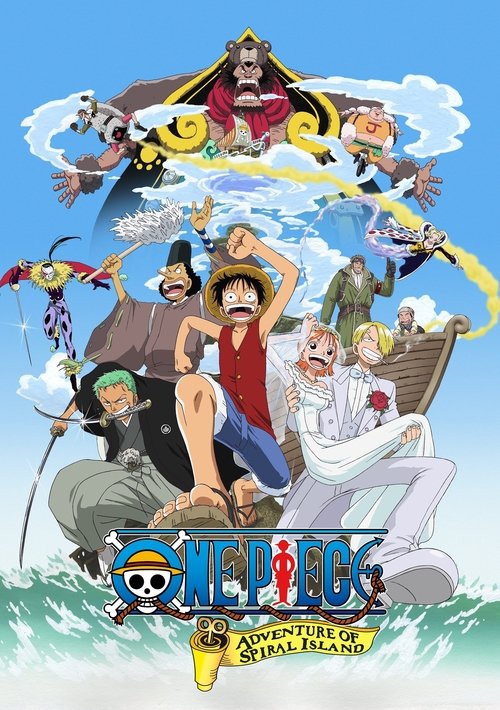
One Piece: Clockwork Island Adventure
2001
No user ratings available yet
Representation score: 7.5 out of 10
Representation Score
Excellent
2002
PG-13Director
Junji Shimizu
Runtime
56 minutes
Average Rating
No ratings yetNew Showbiz Analysis
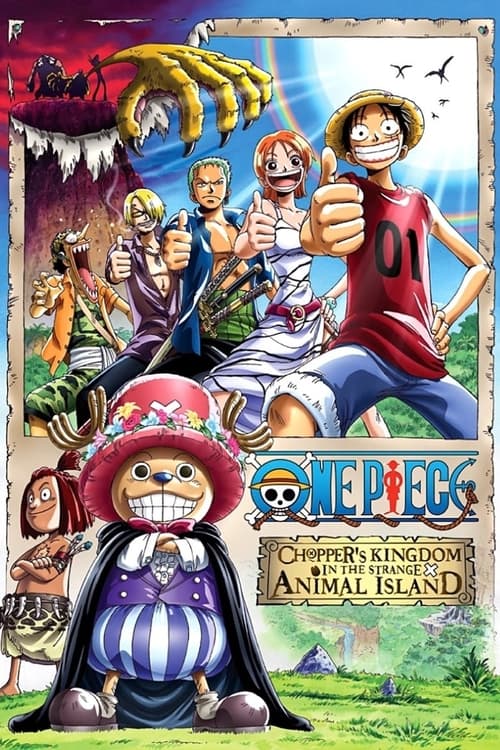
The film uses non-human characters to explore identity and social hierarchy effectively. By placing a non-human character as a leader, it challenges traditional ideas of authority and belonging. However, it lacks direct representation of specific identity issues like LGBTQ relationships or strong female characters. This limits the depth of its social commentary despite its sophisticated structure. Ultimately, the work offers a meaningful critique of individualistic greed and institutional law, favoring communal involvement over rigid traditional power structures.
Category Breakdown
The film doesn't explicitly show LGBTQ relationships or characters questioning their gender. However, it uses the idea of family formed outside traditional bonds to challenge typical family structures.
The team functions based on skill rather than gender roles. Despite having mostly male characters, the film avoids reinforcing traditional gender-based hierarchies.
By making Chopper, a non-human character, the king, the film challenges human-centric views and ethnic hierarchies. Different species represent complex social structures.
The story criticizes greedy capitalism through Count Butler's actions compared to the island's communal society. It also looks at moral relativism around the idea of piracy.
Chopper’s unique and 'othered' body is central to his role as a leader. The film avoids turning him into an inspirational figure, focusing instead on adventure themes.
Present on Screen
Limited or Absent
Official Synopsis
As the Straw Hat Pirates sail through the Grand Line, a sudden eruption of geysers beneath the Going Merry sends the crew flying over a nearby island. In the chaos, Chopper falls overboard and becomes separated from his friends. While Luffy and the others land on the far side of the island, Chopper finds himself hailed as the new king by the local animals. However, danger looms as a group of human “horn hunters” arrives. Their leader, Count Butler, is a violin-playing man who consumes horns to gain strength, and he seeks to devour the island’s greatest treasure to inherit immense power. Can Luffy and the crew stop Count Butler’s scheme and save the island? And will they be able to show Momambi that not all pirates are the villains he believes them to be?
2001
2003

2012
2015
2000

2017
2016

2004
No reviews yet. Be the first to share your thoughts on this movie!
Use the rating form above to leave a star rating and optional review.