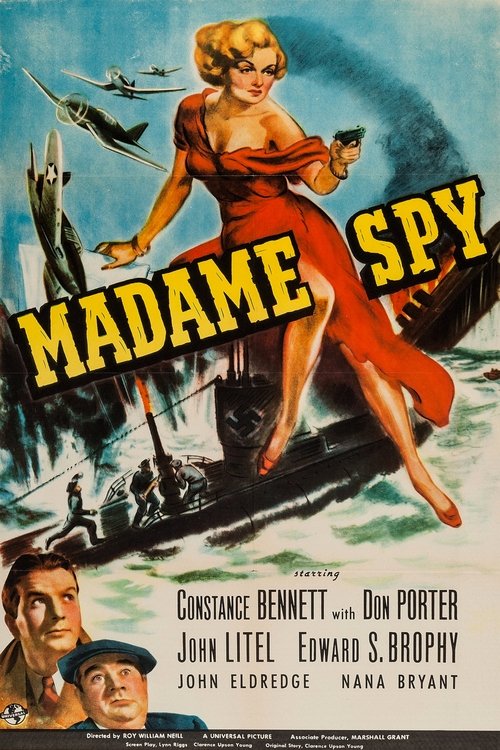
Madame Spy
1942
No user ratings available yet
Representation score: 0.4 out of 10

Representation Score
Limited
1942
ApprovedDirector
Benjamin Stoloff
Runtime
57 minutes
Average Rating
No ratings yetNew Showbiz Analysis
Secret Enemies is a product of the 1942 studio system, designed to reinforce nationalistic sentiment and institutional authority during World War II. The narrative structure focuses on the effectiveness of the FBI in neutralizing Nazi spies, which prioritizes a clear moral binary. By emphasizing masculine competence and state-sanctioned intervention, the film naturally sidelines diverse identities, favoring a traditionalist worldview that upholds existing social hierarchies and patriotic frameworks. Ultimately, the film serves as a genre-driven tool for wartime morale rather than a platform for social complexity or diverse representation.
Category Breakdown
The film follows strict conventions that assume everyone is straight and cisgender. It does not include any non-traditional sexual or gender identities.
The story emphasizes masculine authority through its focus on FBI agents. Female characters likely play supporting or domestic roles rather than driving the plot independently.
The film probably features a homogeneous cast centered on domestic espionage. Depictions of the era often rely on ethnic caricatures rather than a multi-ethnic or integrated social landscape.
The story reinforces Western institutional stability by centering the FBI. It promotes patriotism and the legitimacy of state power against external threats.
There is no indication of neurodivergent or physically disabled characters portrayed with real power. Disability in this era often served as a shorthand for character weakness.
Present on Screen
Limited or Absent
Official Synopsis
FBI agents Carl Becker and John Trent raid a New York City hotel, sending Nazi spies to an upstate hunting lodge.
1942

1952

1952

1946
1959
1945
1947
1935
No reviews yet. Be the first to share your thoughts on this movie!
Use the rating form above to leave a star rating and optional review.