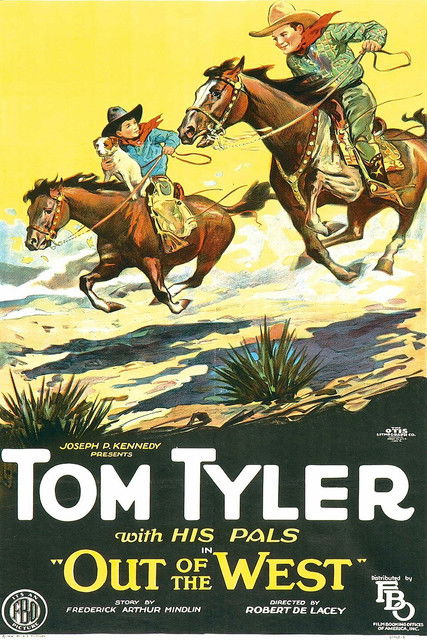
Out of the West
1926
No user ratings available yet
Diversity score: 2.3 out of 10
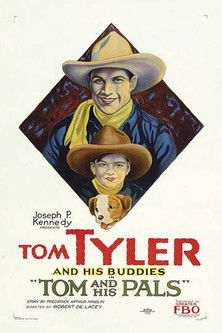
1926
PassedDirector
Robert De Lacey
Runtime
54 minutes
Average Rating
No ratings yetSynopsis
Tom Duffy, whose father is the half-owner of the Flying-U Ranch, spends half his time reading movie magazines and the other half with Mary Smith. Mary and her kid-brother, Frankie, are heirs to the other half of the Flying U, and wards of Tom's Father. Tom's interest in movie magazines is Pandora Golden, the movie vamp. Tom is thrilled when he learns that Pandora's next film will be shot on the ranch.
Overall Score
Limited
Category Breakdown
LGBTQ+ Representation
The film lacks LGBTQ+ characters or narratives that challenge heteronormativity. The central romance between Tom and Mary follows conventional 1920s romantic structures.
Gender Representation
The story centers on a male protagonist and his fascination with a female cinematic icon. While women hold significant roles as heirs, the narrative follows a traditional gender hierarchy.
Racial & Ethnic Diversity
Set in a Western ranch context, the film appears to adhere to the racial norms of the era. There is no evidence of diverse casting or characters of color with agency.
Religious & Cultural Diversity
The plot focuses on property, inheritance, and ranching lifestyles. It reinforces traditional Western values regarding land ownership and social stability without deconstructing these institutions.
Disability Representation
There is no mention of characters possessing visible or invisible disabilities within the narrative.
Strengths
Areas for Improvement
AI Analysis
Tom and His Pals is a conventional 1920s Western drama that mirrors the social hierarchies of its time. The narrative is driven by traditional themes of inheritance, ranch life, and romantic interests, offering little in the way of systemic critique or intersectional complexity. The film relies on established genre tropes, focusing on a male-centric perspective and the preservation of landed interests. It functions as a period piece that reinforces the status quo rather than subverting it. Ultimately, the work lacks representation for marginalized identities, including LGBTQ+ individuals, people of color, and those with disabilities, reflecting the homogeneous storytelling typical of the silent Western era.
1926
1929
1927
1927
1920
1959
1931
1927
1924
1931
1926
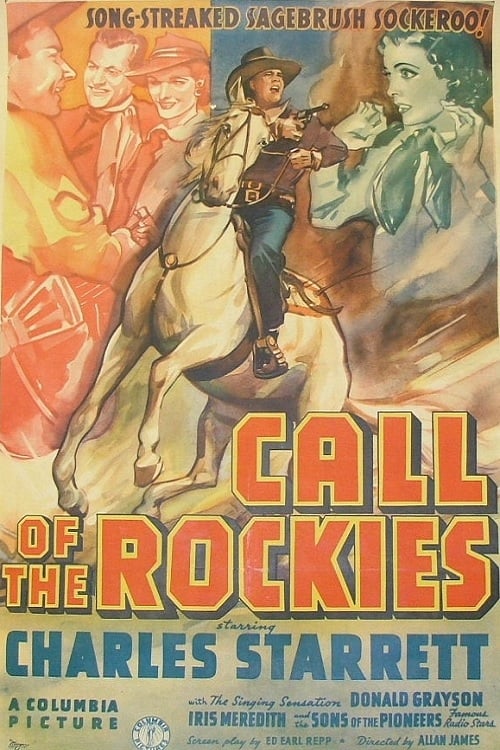
1938
No reviews yet. Be the first to share your thoughts on this movie!
Use the rating form above to leave a star rating and optional review.