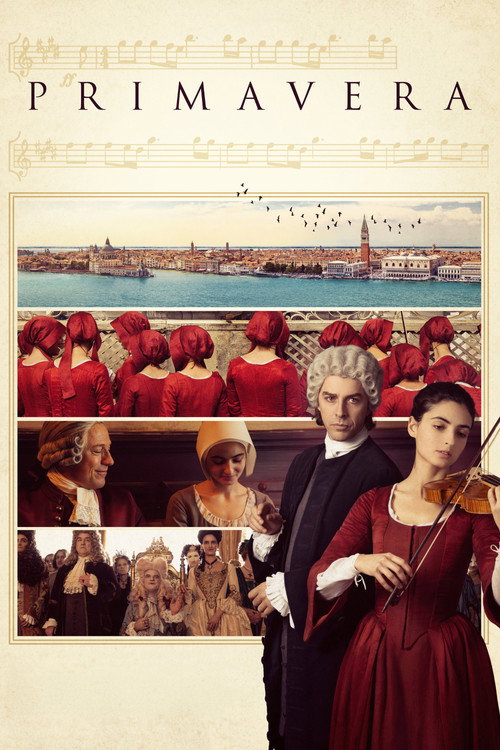
Primavera
2025
No user ratings available yet
Representation score: 6.2 out of 10

Representation Score
Fair
2022
Director
Petr Václav
Runtime
141 minutes
Average Rating
No ratings yetNew Showbiz Analysis
The Bohemian provides a sophisticated critique of 18th-century social and religious hierarchies. By focusing on personal liberation and the dismantling of traditional authority figures, the film succeeds in challenging established norms. While the film effectively explores social mobility and the subversion of class constraints, it remains firmly grounded in a specific European historical context. This limits its broader racial and ethnic scope. Ultimately, the film's strength lies in its thematic focus on individual autonomy, emphasizing sensory experience and subjective identity over the rigid institutional structures of the era.
Category Breakdown
The film highlights a lifestyle that challenges conventional morality through non-normative desires. Although specific LGBTQ identities are not explicitly stated, the protagonist's journey revolves around these unconventional desires.
The marquise plays a pivotal role in driving the story, showing more ability to act and wisdom than the male lead. This reverses typical period drama dynamics by making her the primary mentor.
The narrative centers on European class dynamics within 1764 Venice, exploring 'otherness' through the protagonist's outsider status rather than through diverse racial casting.
The story celebrates secularism and moral relativism, portraying the protagonist's growth as a liberation from religious intolerance and the rigid dogmas of his provincial upbringing.
There is no discernible evidence regarding the portrayal of physical or neurodivergent disabilities in the narrative.
Present on Screen
Limited or Absent
Official Synopsis
The year is 1764. For over a year, Josef has been leading a precarious life in Venice. He hopes to become an opera composer. The city, full of talented and already-established composers, seems closed to him. Looking for work as a violinist, he comes into the orbit of a rich young woman. Thanks to her, he gets the opportunity to play at salons. But his real opportunity arises when he becomes the lover of a libertine marquise. She teaches him worldly manners, rids him of signs of a provincial upbringing and introduces him to a hedonistic existence free from religious intolerance. Thus transformed, Josef gets an incan incredible commission: to write an opera for the San Carlo, Europe's largest theatre.
2025
1991
1969
1976
1947
2023
1979
2000
No reviews yet. Be the first to share your thoughts on this movie!
Use the rating form above to leave a star rating and optional review.