
Good Riddance
1980
No user ratings available yet
Representation score: 5.3 out of 10
Representation Score
Good
1989
RDirector
Allan King
Runtime
104 minutes
Average Rating
No ratings yetNew Showbiz Analysis
Termini Station is a gritty, realist character study that prioritizes psychological truth over traditional social hierarchies. It succeeds by deconstructing conventional domestic roles, particularly through its nuanced portrayal of female experience and struggle. However, the film lacks breadth in its social scope. The narrative remains centered on a homogeneous demographic, offering little visibility for LGBTQ+ identities or diverse racial and ethnic perspectives. Ultimately, the film's strength lies in its refusal to romanticize the nuclear family, instead focusing on the systemic pressures and psychological autonomy of its protagonists.
Category Breakdown
The film focuses on the domestic friction and generational trauma within a nuclear family. There is no explicit evidence of non-straight relationships or critiques of the assumption that everyone is straight.
The narrative centers on the complexities of female experience, disrupting traditional domestic hierarchies. Molly is depicted through her struggle with alcoholism, subverting the nurturing mother cliché.
Set in a small Northern Ontario town, the film reflects a relatively homogeneous demographic. There is no evidence of significant racial or ethnic blending within the central character arcs.
The film challenges Western ideals of the ideal family by portraying the domestic sphere as a source of tension. It critiques small-town social structures and traditional stability.
The story engages with addiction and mental health as central narrative drivers. Molly's alcoholism is treated as a lived experience rather than a peripheral plot device.
Present on Screen
Limited or Absent
Official Synopsis
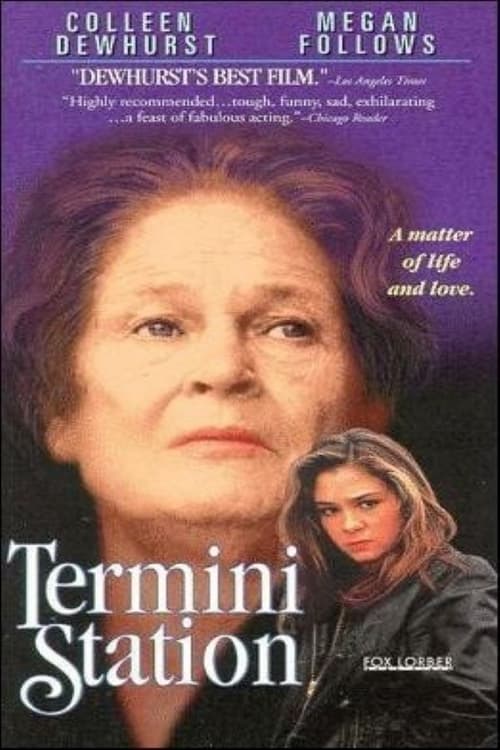
Termini Station is a Canadian made drama, released in 1989 and directed by Allan King. The film stars Colleen Dewhurst and Megan Follows as Molly and Micheline Dushane, a mother and daughter living in a small Northern Ontario town. Molly is an alcoholic, which creates tension between her and Micheline and inspires Micheline's fantasies of escaping her stifling small-town life. The cast also includes Gordon Clapp and Debra McGrath as Molly's son and daughter-in-law. Termini Station was the only film besides the Anne of Green Gables movies in which Follows and Dewhurst worked together. The film was nominated for six awards at the 11th Genie Awards, including Best Picture and Best Actress nods for both Dewhurst and Follows. Filmed on location in Kirkland Lake Ontario.
1980

1967

2013

1994

1998

2020

2018

1999
No reviews yet. Be the first to share your thoughts on this movie!
Use the rating form above to leave a star rating and optional review.