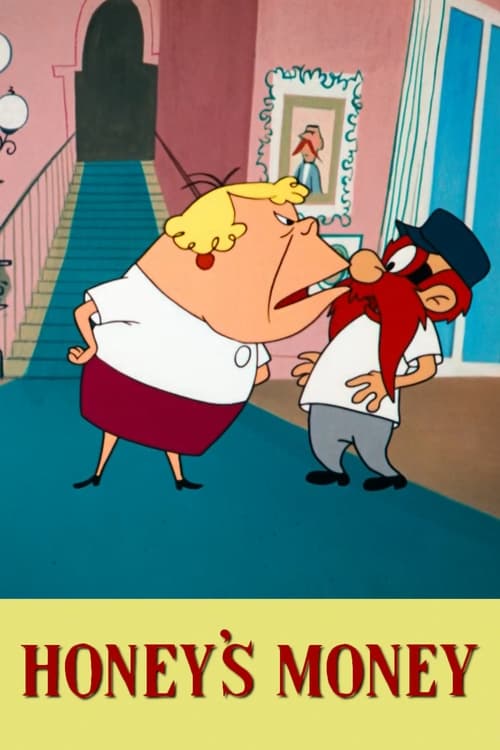
Honey's Money
1962
No user ratings available yet
Representation score: 1.4 out of 10
No Poster Available
Representation Score
Minimal
1970
GDirector
Arthur Davis
Runtime
6 minutes
Average Rating
No ratings yetNew Showbiz Analysis
A Taste of Money is a traditional comedic short that relies heavily on established social archetypes. The narrative focuses on the friction of a marriage motivated by wealth, using domestic conflict as its primary engine for humor. The film lacks complexity in representing various aspects of identity, opting instead for conventional character motivations. It operates within a narrow framework that reinforces traditional social hierarchies rather than challenging them. Ultimately, the work serves as a moralizing fable about greed, lacking the representation or subversion necessary to move beyond mid-century comedic clichés.
Category Breakdown
The story centers on a marriage driven by financial gain, with no representation of non-straight or non-cisgender identities. There is no critique of traditional domestic structures.
The film uses gender stereotypes, featuring a bossy widow and a greedy male protagonist. These characters serve as comedic caricatures rather than nuanced explorations of gender roles.
The narrative focuses on a small, localized domestic unit. There is no indication of a diverse cast or inclusion of non-Anglo-Saxon characters.
The plot treats greed and domestic dysfunction as comedic elements. It lacks any critique of Western institutions or evidence of secularist or anti-establishment themes.
The synopsis provides no mention of characters with visible or invisible disabilities.
Present on Screen
Limited or Absent
Official Synopsis
Tired of being poor, Rattfink marries a widow for her money. But the situation may be more than he can handle, when he has to put up with her bossiness and the non-stop chatter of her gargantuan son.
1962
1950
1969
1970
1969
1968
1966
1949
No reviews yet. Be the first to share your thoughts on this movie!
Use the rating form above to leave a star rating and optional review.