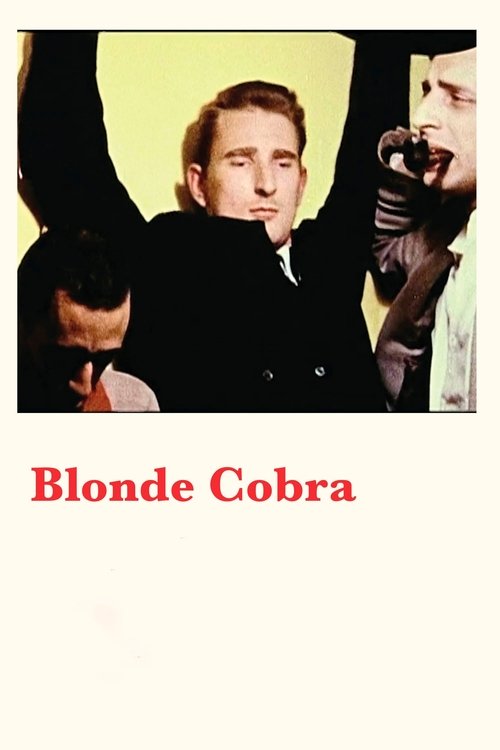
Blonde Cobra
1963
No user ratings available yet
Representation score: 6.1 out of 10

Representation Score
Fair
1967
Director
Roland Lethem
Runtime
19 minutes
Average Rating
No ratings yetNew Showbiz Analysis
Roland Lethem’s short film is a powerful exploration of surrealism to critique societal and biological structures. It uses the body as a site of psychological struggle and challenges traditional narratives and religious dogma. However, its abstract nature means it lacks direct representation of race or disability, focusing instead on psychoanalytic and symbolic themes.
Category Breakdown
The film explores desire and bodily autonomy using surrealist imagery. The 'Corps' segment presents a unique view of intimacy and self-realization.
The work challenges traditional gender roles and biological determinism. The 'Etoile' segment depicts the loss of vitality and masculinity through the act of giving birth.
The film focuses on surrealist biological and psychological symbolism. There is no evidence of racial or ethnic characterization present in the narrative.
The film critiques Western institutions, particularly Catholicism. The 'Hymen' segment uses religious symbols to show how dogma can be oppressive.
The narrative focuses on surreal transformations and decay. There are no characters with physical or neurodivergent disabilities.
Present on Screen
Limited or Absent
Official Synopsis
A surrealist saga in four parts: 1.) The credit sequence in which title cards show successively larger foetuses pulsating on the screen until the baby is born and cries. 2.) Etoile-directly referring to Cocteau, Lethem shows an adolescent sucking a starfish and then giving birth to a smaller starfish. A statement of inadequacy. To give birth involves an emasculation and a loss of vitality. 3.) Corps-two images of a man on a couch groping for each other, watched by a mysterious peeping Tom. As the two superimposed images come together, the heavy breathing subsides…the statement that the birth of desire is a self – realisation. 4.) Hymen – The decaying body of a girl is shot through green filters, and the final image reveals her vagina crawling with maggots and overlain with a crucifix. A representation of Catholicism preventing the free expression of desire.
1963
1974
1967
1967
1968
1993
1968

1964
No reviews yet. Be the first to share your thoughts on this movie!
Use the rating form above to leave a star rating and optional review.